Hard Water in North Texas — What NTMWD Water Does to Your Pipes, Water Heater, and Fixtures
Every home in Plano, Frisco, McKinney, Wylie, Rockwall, Rowlett, and Mesquite receives the same hard to very hard water from the North Texas Municipal Water District every single day. Most homeowners do not notice it until a water heater fails early, water pressure drops without explanation, or a plumber finds scale buildup inside pipes that should have lasted another decade. By that point the damage has already been compounding for years.
What Is Hard Water and Where Does It Come From in North Texas
Hard water is water with elevated levels of dissolved calcium and magnesium. These minerals are measured in grains per gallon. Water below 3.5 grains per gallon is considered soft. Water above 10.5 grains per gallon is classified as very hard. NTMWD water regularly tests in the hard to very hard range depending on the source reservoir and the season.
NTMWD draws from several regional reservoirs including Lake Lavon, Lake Ray Hubbard, Lake Lewisville, and Lake Texoma. Each reservoir carries dissolved minerals picked up from the surrounding North Texas geology. By the time that water reaches your tap it has traveled through a system designed to meet federal drinking water safety standards — but hardness is not a safety issue under federal law, so it is not removed during treatment.
Every home served by NTMWD receives this water. That includes Plano, Frisco, McKinney, Rockwall, Wylie, Rowlett, Mesquite, and dozens of surrounding communities across Collin, Denton, and Dallas counties. Garland and Richardson receive water through Dallas Water Utilities which draws from the same regional reservoir system and delivers water with similar hardness levels.
The minerals in that water are harmless to drink. They are not harmless to your plumbing.
What Hard Water Does to Your Pipes
Every time water moves through your pipes it leaves a small deposit of calcium and magnesium behind. One pass leaves almost nothing. Ten years of passes leaves a measurable layer of scale on the interior pipe wall. Twenty years leaves enough to narrow the pipe’s effective diameter and reduce water pressure throughout the house.
Most homeowners notice the pressure drop gradually. It happens slowly enough that many assume it is a municipal supply issue or a problem with the pressure regulator. In most cases it is neither. It is scale buildup that has been accumulating since the day the home was connected to the water supply.
Older DFW homes with cast iron or galvanized steel pipes face the most accelerated damage. Hard water minerals react with the iron in those pipe walls and speed up internal corrosion. A galvanized steel pipe that might last 40 to 50 years in a low-hardness water region may show significant flow restriction in a North Texas home after 25 to 30 years.
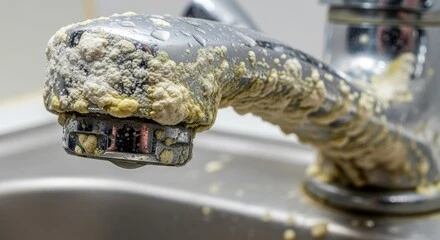
PEX and copper pipes handle hard water better but are not immune. Scale accumulates at fixture connections, valve seats, and any point where water slows or changes direction. The most visible sign is the white or yellowish crusty buildup that forms around faucet aerators and showerhead nozzles. That buildup is the same mineral scale forming inside your pipes — just visible on the outside.
What Hard Water Does to Your Water Heater
Your water heater is where hard water damage becomes most expensive. Every gallon of water heated in the tank deposits a small amount of mineral scale on the heating element and the tank floor. Over time that scale layer grows thick enough to insulate the element from the water it is trying to heat.
The US Department of Energy found that a quarter inch of mineral scale reduces water heater efficiency by up to 40 percent. In practical terms that means your water heater is consuming significantly more energy to produce the same amount of hot water it produced when it was new. Your energy bills rise. Recovery time between uses gets longer. The system runs hotter and longer to compensate, accelerating wear on every internal component.
The national average lifespan for a tank water heater is 15 to 20 years. In North Texas, where NTMWD hard water has been depositing scale since the day the unit was installed, that lifespan drops to 10 to 15 years in most homes. Some units fail at 8 to 10 years when hard water damage compounds on a system that was never flushed or descaled.
The popping and rumbling sounds that many DFW homeowners hear from their water heater are a direct symptom of this process. Scale accumulates on the tank floor and traps small pockets of water beneath it. When the burner fires, that trapped water superheats and forces its way through the scale layer. The sounds are the scale being disturbed. By the time a water heater is making those noises regularly, the damage is already significant.
If your water heater is over 12 years old and showing any of these signs, our water heater repair and replacement service can assess whether repair or replacement is the right call for your specific situation.
What Hard Water Does to Your Fixtures and Appliances
Pipes and water heaters get most of the attention but hard water affects every fixture and appliance connected to your water supply simultaneously. The scale does not discriminate by fixture type or age.
Faucet valves and cartridges accumulate scale around the valve seat and cartridge housing over time. The result is a faucet that gradually becomes stiff to turn, drips when closed, or loses the ability to regulate temperature accurately. Most homeowners replace the cartridge without addressing the underlying scale problem and see the same issue return within a few years.
Showerheads show the most visible effects. The small spray nozzles restrict as mineral deposits accumulate inside them. Flow drops, spray patterns become uneven, and the nozzles eventually clog entirely. Soaking a showerhead in vinegar clears surface deposits but does nothing about the scale forming inside the supply line feeding it.
Dishwashers and washing machines work harder in hard water conditions. Scale builds on heating elements, pump components, and water inlet valves. Dishes come out with a white film. Laundry feels stiff. Both appliances consume more energy and require more detergent to produce the same results. Their service life shortens accordingly.
Garbage disposals are affected through scale buildup on motor shaft seals and grinding components. The damage is slower than in heating appliances but cumulative over years of use.
Toilets develop scale inside the tank that affects the fill valve and flapper. A toilet that runs intermittently or requires frequent flapper replacements in a DFW home is often a hard water problem as much as a mechanical one.
Every water-using appliance and fixture in a North Texas home is being affected by the same water at the same time. The damage compounds across all of them simultaneously whether the homeowner notices or not.
How to Know If Hard Water Is Already Damaging Your Plumbing
Hard water damage builds slowly and most of the signs appear gradually enough that homeowners adjust to them without realizing something has changed. These are the most common indicators that scale accumulation is already affecting your plumbing system.
White or yellowish crusty deposits around faucet bases, showerhead nozzles, and fixture connections are the most visible sign. That buildup is mineral scale. What you see on the outside is forming on the inside of your pipes and water heater at the same time.
Water pressure that is lower than it used to be throughout the house — not just at one fixture — points to scale narrowing pipe interiors or clogging fixture aerators. If pressure has dropped gradually over several years with no obvious cause, hard water scale is the most likely explanation in a North Texas home.
A water heater that makes popping or rumbling sounds, takes longer to produce hot water, or runs more frequently than it used to is showing the effects of scale buildup on the heating element and tank floor.
Water and energy bills that have increased without a corresponding increase in household usage indicate your water heater and appliances are working harder to compensate for scale insulation.
Soap and shampoo that do not lather properly and leave a residue on skin or hair are a daily reminder that dissolved minerals are interfering with every water-based task in the home.
Dishes coming out of the dishwasher with white spots or a cloudy film even after a full cycle indicate hard water is depositing minerals on surfaces faster than the dishwasher can rinse them away. If two or more of these signs are present in your home, the damage is already underway. Use our free plumbing diagnostic tool to identify which issues may need professional attention first
What North Texas Homeowners Can Do About Hard Water
Hard water damage is not inevitable. There are practical steps that stop the damage at the source and extend the life of every pipe, appliance, and fixture in the home.
A whole-home water softener is the most effective solution for DFW homeowners. It works by exchanging dissolved calcium and magnesium ions for sodium ions before the water enters the home’s pipe system. The result is softened water that does not deposit scale anywhere downstream. A whole-home softener installation in North Texas typically costs $1,200 to $3,500 depending on system size and existing plumbing conditions. That cost pays for itself in extended appliance lifespan, lower energy bills, and reduced repair frequency. Independent analysis documents hard water costing DFW households $1,780 to $2,280 annually before a softener is installed. Our water filtration and softener installation service covers system selection, sizing, and installation for any North Texas home.
Reverse osmosis is a targeted solution for drinking water at the kitchen tap. It removes dissolved minerals from a single point of use but does not protect the rest of the plumbing system. It works well alongside a whole-home softener for homeowners who want the highest quality drinking water but is not a substitute for treating the whole house.
Regular water heater maintenance — specifically flushing sediment from the tank and descaling the heating element annually — extends the unit’s lifespan meaningfully in hard water areas. A water heater that is flushed regularly in a DFW home can add three to five years to its service life compared to one that has never been maintained.
Cleaning fixture aerators is a simple maintenance task that restores flow without requiring a plumber. Unscrew the aerator from the faucet tip, soak it in white vinegar for 30 minutes, and rinse clear. This removes surface mineral deposits and restores normal pressure at that fixture. It should be done every six to twelve months in a hard water home.
Use our plumbing cost estimator to get a realistic sense of what water softener installation or water heater maintenance costs in your specific DFW city.
Does Hard Water Affect Every City in the DFW Metro the Same Way
Every DFW city receives hard water but the specific hardness level varies slightly based on the water supply source and how far the water travels from the treatment plant to the home.
NTMWD cities receive the most consistent supply. Plano, Frisco, McKinney, Wylie, Rockwall, Rowlett, and Mesquite all draw from the same regional treatment system and receive water in a similar hardness range year-round. Seasonal variation exists as reservoir levels and source blending change but the water is hard to very hard throughout the year regardless of season.
Garland and Richardson receive water through Dallas Water Utilities which draws from Lake Ray Hubbard and other regional sources. Hardness levels are comparable to NTMWD supply. A home in Garland and a home in Frisco face the same fundamental hard water challenge even though they receive water from different utilities.
No DFW homeowner is exempt from this issue. The variation between cities is real but it does not change the core conclusion. Every home in the metro is receiving water that deposits scale continuously.
The timing of when damage becomes noticeable depends heavily on home age. Newer homes in fast-growing cities like Frisco and McKinney are only now entering the 10 to 20 year window when hard water damage becomes measurable. Homes in older cities like Garland and Richardson have had decades of accumulation building inside cast iron and galvanized steel systems. The damage looks different depending on the city but the cause is the same water.
If you want to understand what hard water has done to the plumbing in your specific home our plumber in Wylie TX and plumber in Rockwall TX pages cover the local conditions in detail. Every city we serve has its own plumbing story shaped by the same hard water supply.
Hard water is not a future problem for North Texas homes. It is an active one that has been working on your pipes, water heater, and fixtures since the day your home was connected to the municipal supply. A licensed plumber can assess how much scale damage has already accumulated, identify which systems are closest to failure, and give you a written price to address them before they become emergencies.