Should You Get a Water Softener in DFW? A North Texas Homeowner’s Guide
Independent water quality analysis documents that hard water costs the average North Texas household between $1,780 and $2,280 every year in accelerated appliance wear, higher energy bills, increased detergent use, and recurring plumbing repairs. That figure accumulates quietly without a single large bill to trigger attention. A whole-home water softener is the one change that stops that cost at the source — and for most DFW homes it pays for itself within two to three years.
What Does a Water Softener Actually Do
A water softener removes dissolved calcium and magnesium from your water supply before it enters your home’s pipe system. It does this through a process called ion exchange. Water passes through a tank filled with resin beads that carry a negative charge. Calcium and magnesium ions carry a positive charge and bond to the resin. Sodium ions — which do not cause scale — are released into the water in their place. The result is softened water that flows through your pipes without depositing minerals anywhere downstream.
The calcium and magnesium are removed completely. Not reduced. Not neutralized. Removed. That distinction matters because scale damage requires no threshold level to begin — any hardness in the water continues the deposit process. A properly sized and installed whole-home softener stops that process at the point of entry for every fixture, appliance, and pipe in the house simultaneously.
What a softener does not do is equally important to understand. It does not filter bacteria, sediment, chlorine, or other contaminants. It does not purify drinking water in the way a reverse osmosis system does. The sodium added during ion exchange is minimal — roughly 20 to 30 milligrams per liter in most systems — and is not considered a health concern for the general population under normal use. However homeowners on sodium-restricted diets should consult a physician before installing a salt-based system on their drinking water supply.
A water softener makes your water gentle on your plumbing. It does not make it pharmaceutical grade. Homeowners who want both scale protection and high-quality drinking water typically install a whole-home softener alongside a point-of-use reverse osmosis system at the kitchen tap. Each does its job without overlap.
What a Water Softener Prevents in a North Texas Home
The financial case for a water softener in a DFW home is not theoretical. Every item below represents a real recurring cost that a whole-home softener eliminates or significantly reduces from the day it is installed.
Scale buildup inside pipes stops at the source
Without calcium and magnesium entering the pipe system there is nothing to deposit on pipe walls, valve seats, or fixture connections. Pipes that would have narrowed over 10 to 20 years of hard water exposure maintain their full interior diameter. Water pressure stays consistent. The slow creep of flow restriction that affects most North Texas homes never starts.
Water heater lifespan extends meaningfully
The scale accumulation that reduces a DFW water heater’s efficiency by up to 40 percent and cuts its service life to 10 to 15 years does not form in a softened water system. A water heater in a home with a whole-home softener operates closer to its designed lifespan of 15 to 20 years and maintains its efficiency throughout that period.
Fixture valves and cartridges last longer
Faucets that would develop stiff operation, dripping, or cartridge failure from scale buildup continue to operate correctly. Showerhead nozzles stay clear. Aerators stay open. The recurring cost of fixture repairs and cartridge replacements drops significantly.
Appliance efficiency is maintained year over year
Dishwashers clean properly without the hard water film that coats dishes and interior surfaces. Washing machines rinse thoroughly with less detergent. Both appliances operate at their designed efficiency for their full intended service life rather than degrading progressively under scale accumulation.
Soap and detergent consumption drops noticeably
Soft water lathers with significantly less product than hard water requires. Most households see a 50 to 75 percent reduction in soap, shampoo, and detergent use after installing a softener. That reduction adds up across a full year of household use.
Combined these savings account for the documented annual cost difference of $1,780 to $2,280 that hard water imposes on the average North Texas household. A softener does not just protect your plumbing. It reduces a real ongoing financial drain that most homeowners have been absorbing for years without connecting it to their water supply.
How Do You Know If Your DFW Home Needs a Water Softener
The direct answer is that every home in the DFW metro served by NTMWD or Dallas Water Utilities benefits from a whole-home water softener. The question is not whether your home needs one. It is how much damage has already accumulated while it has been running without one.
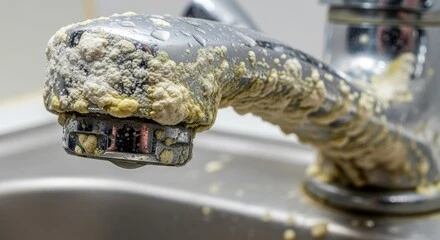
That said, certain homes have more urgent need than others. If you can see scale buildup around faucet bases, showerhead nozzles, or fixture connections, the same mineral deposits are forming inside your pipes and on your water heater heating element. Visible scale means the process has been active long enough to leave external evidence. Internal damage is already present.
If your water pressure has dropped gradually over several years with no obvious cause, scale has likely narrowed pipe interiors or clogged fixture aerators to the point of measurable flow restriction. Restoring pressure requires clearing existing scale and stopping new deposits — a softener handles the second part permanently.
If your water heater is making popping or rumbling sounds, scale has accumulated on the tank floor to the point where the burner is disturbing it during heating cycles. A softener stops further accumulation but the existing scale may require a flush or descale service to address what is already there.
Homes built before 1995 face the most urgent case. Galvanized steel supply lines and cast iron drain systems in older Garland, Mesquite, and Richardson properties have been exposed to hard water for 30 to 50 years. The scale damage in these homes is compounded and a softener is one part of a broader assessment. For a full list of hard water symptoms and what they indicate visit our hard water guide for North Texas homeowners.
Newer homes in Frisco and McKinney built in the 2000s and 2010s are receiving the same hard water every day. The damage is less advanced but the accumulation clock is running. Installing a softener in a 15 year old home prevents the problems that a 30 year old home without one is now dealing with.
What Types of Water Softeners Are Available
Not all water treatment systems do the same thing. Understanding the difference matters before spending money on a system that may not address the hardness level DFW water actually delivers.
Salt-based ion exchange systems are the most effective option for whole-home hard water treatment. They are the only system type that fully removes dissolved calcium and magnesium from the water supply before it enters the home. For North Texas homes receiving hard to very hard NTMWD or Dallas Water Utilities supply, a properly sized salt-based system is the standard recommendation. This is what we install.
Salt-free descalers work differently. Rather than removing hardness minerals they alter the structure of calcium and magnesium particles so they are less likely to bond to pipe surfaces. They prevent new scale formation but do not remove existing hardness from the water and do not eliminate the minerals entirely. In a low to moderate hardness area they can be adequate. In a hard to very hard water area like DFW their performance is limited compared to a salt-based system.
Reverse osmosis systems treat water at a single point of use — typically the kitchen tap. They produce high-quality drinking water by forcing water through a semipermeable membrane that removes minerals, contaminants, and dissolved solids. They are an excellent addition to a whole-home softener for drinking water quality but they do not protect pipes, water heaters, or appliances throughout the rest of the house.
Magnetic descalers are devices that attach to the outside of a pipe and claim to alter mineral behavior through a magnetic field. The evidence supporting their effectiveness in hard water conditions is limited. We do not recommend them as a primary solution for DFW homes.
The hardness level in North Texas is not marginal. It requires a system that actually removes the minerals causing the damage. A salt-based whole-home softener sized correctly for your home’s water usage and inlet hardness level is the only option that reliably delivers that result.
How Much Does a Water Softener Cost in DFW
Water softener cost in North Texas breaks down into three components — equipment, installation, and ongoing maintenance. Understanding all three gives a complete picture of what you are actually committing to.
Equipment cost runs between $400 and $1,500 for a residential salt-based whole-home softener depending on system capacity and brand. A correctly sized system for a standard three to four bedroom North Texas home typically falls in the $600 to $1,000 range for the unit itself. Larger homes with higher daily water usage require higher-capacity systems that run toward the upper end of that range.
Installation cost runs between $300 and $800 depending on where the main water entry point is located, how accessible the plumbing is, and whether any existing connections need modification. Most North Texas homes have a straightforward installation path and fall in the $300 to $500 range for labor.
Total installed cost for most DFW homes runs between $800 and $2,800 depending on system size and installation complexity. The majority of standard residential installations land between $1,000 and $1,800 all in.
Ongoing cost is minimal. A salt-based softener requires periodic salt replenishment to regenerate the resin beads. Most households spend $5 to $15 per month on salt depending on water hardness level, household size, and system efficiency. Annual maintenance beyond salt replacement is minimal for a properly installed system.
Return on investment is straightforward. Independent analysis documents hard water costing DFW households $1,780 to $2,280 annually in appliance wear, energy costs, and increased product consumption. At a total installed cost of $1,000 to $1,800 most North Texas homeowners recover their investment within one to two years and continue saving every year after that. Use our plumbing cost estimator to get a realistic number for your specific home and city before you call anyone.
What to Expect During Water Softener Installation
Water softener installation in a North Texas home is a straightforward process when done by a licensed plumber.
The system is installed at the main water entry point so it treats all water entering your home before it reaches any fixture or appliance.
Here’s what the process looks like:
System placement and connection
The softener unit is positioned near your main water line, typically in a garage, utility room, or exterior wall. The system is connected directly to the incoming supply line.
Bypass valve and shutoff setup
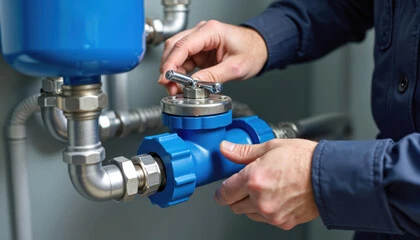
A bypass valve is installed so the system can be serviced without shutting off water to the entire home.
Drain line installation
The system requires a drain connection to discharge minerals during regeneration cycles. This is routed to a safe drainage point.
Testing and calibration
Once installed, the system is tested for leaks, programmed based on your home’s water hardness level, and calibrated for your household usage.
Time required
Most standard installations in DFW homes are completed in 2 to 4 hours.
After installation, your entire home immediately begins receiving softened water. There is no delay, no transition period, and no disruption beyond the installation window.
Water Softener or Whole-Home Filtration — What Is the Difference
Many North Texas homeowners use the terms interchangeably. They are not the same thing and understanding the difference helps you make the right decision for your home.
A water softener addresses hardness only. It removes dissolved calcium and magnesium through ion exchange and replaces them with sodium. It does not remove chlorine, sediment, volatile organic compounds, or other contaminants present in municipal water. It is a single-purpose system that does its one job completely.
A whole-home filtration system addresses contaminants other than hardness. Carbon filtration systems remove chlorine, chloramines, and some organic compounds from the water supply. Sediment filters remove particulate matter. Neither type removes hardness minerals in the way a salt-based softener does. A filtration system alone does not stop scale buildup.
Reverse osmosis operates at a single point of use — typically under the kitchen sink. It produces the highest quality drinking water by removing dissolved solids, minerals, contaminants, and chlorine through a membrane filtration process. It does not protect the rest of the home’s plumbing or appliances.
The most practical combination for a North Texas home starts with a salt-based whole-home softener for scale protection and adds a carbon filter for chlorine and taste. Many DFW homeowners install both in the same visit. A point-of-use reverse osmosis system at the kitchen sink is added as a third layer for drinking water quality when budget allows.
Each layer addresses something the others do not. The softener protects the plumbing. The carbon filter improves water taste and removes chlorine at every tap. The reverse osmosis system delivers the cleanest possible drinking water at the kitchen. None of the three replaces the others.
Our water filtration and softener installation service covers all three options and can be installed together or phased across multiple appointments depending on your budget and preference.
For any North Texas home served by NTMWD or Dallas Water Utilities, a whole-home water softener is not a luxury — it is a financially sound decision that reduces a real annual cost most homeowners do not realize they are paying. The hardness level in DFW water is not marginal and the damage it causes is not cosmetic. A licensed plumber can assess your home’s current scale damage, recommend the right system size for your water usage, and install it in a single visit with a written price before any work begins.