7 Warning Signs of a Slab Leak in a DFW Home — What to Look For Before It Costs You Thousands
A slab leak left undetected for 30 days causes an average of $4,000 to $10,000 in structural damage — and in North Texas where expansive clay soil amplifies foundation movement from water intrusion that damage accumulates faster than in most other regions. The signs that a slab leak is developing appear well before the structural damage becomes visible. Knowing what those signs look like is the difference between a $2,000 repair and a $15,000 foundation remediation.
Why Slab Leaks in DFW Are Harder to Catch Than in Other Regions
Two local conditions make slab leaks harder to detect in North Texas than in most other markets and both work against the homeowner in the same direction — they delay the appearance of surface symptoms while damage continues underground.
Dallas County clay soil does not drain. In sandy or loam soil regions water escaping from a slab-embedded pipe disperses through the surrounding soil relatively quickly producing surface symptoms sooner. In DFW clay soil absorbs and holds the escaping water. That retained moisture spreads slowly and unevenly beneath the slab for weeks before producing a detectable surface sign. The slab leak is active. The evidence at the surface has not appeared yet.
Hard water pipe damage delays symptom onset by causing pipe walls to fail gradually rather than suddenly. A copper supply line under a DFW slab that has been thinned by decades of NTMWD hard water corrosion develops micro-fractures that leak slowly at low volume before producing a full pipe failure. A slow low-volume leak takes longer to produce a visible symptom than a sudden high-volume failure. By the time any surface sign appears the leak has often been active for weeks.
DFW homeowners commonly attribute the early signs to other causes. A warm spot on the floor is assumed to be sunlight through a window. A slightly higher water bill is attributed to rate increases from NTMWD or Dallas Water Utilities. A faint mildew smell is blamed on humidity. Each individual sign has a plausible alternative explanation that delays the call to a plumber.
Knowing the specific signs of a slab leak matters more in DFW than in most markets because the local conditions that make slab leaks more common also make them harder to catch early.
Warning Sign 1 — Warm or Wet Spots on Your Floor
A warm or wet spot on your floor with no surface explanation is one of the most direct physical indicators of a slab leak available to a homeowner without any equipment.
Warm spots are caused by a hot water supply line leaking beneath the slab. The escaping hot water heats the concrete and flooring above the leak point. The spot feels noticeably warmer than the surrounding floor — not slightly different but distinctly warmer in a localized area. This sign is most detectable on tile or concrete floors where heat transfers from below more directly than through carpet or thick wood flooring.
Wet spots indicate a cold water supply line or drain line leak beneath the slab. The moisture wicks upward through the concrete and flooring material. On tile floors it may appear as persistent dampness that returns after drying. On wood floors it produces warping, cupping, or soft spots that worsen over time.
How to check requires nothing more than walking barefoot across your floors systematically — room by room across tile and wood surfaces. A warm area that cannot be explained by sunlight, radiant heating, or an appliance directly above it warrants a call to a licensed plumber.
Do not dismiss a warm spot because it seems minor or because the floor looks normal otherwise. A hot water supply line leaking at low volume produces a warm spot weeks before any other symptom appears.
In DFW homes built between the 1960s and 1980s with copper supply lines under the slab a warm floor spot is a high-probability slab leak until professional detection equipment proves otherwise. These pipes have had 40 to 60 years of combined clay soil stress and hard water corrosion — the exact conditions that produce slab leaks in North Texas homes.
Warning Sign 2 — The Sound of Running Water With All Fixtures Off
Pressurized water escaping through a crack in a slab-embedded supply line produces a distinct sound — a faint hiss, rush, or trickle that travels through the concrete and flooring above the leak point. It is audible at floor level in a quiet room when every fixture and appliance in the home is off.
How to check takes less than five minutes. Turn off every faucet, toilet fill valve, dishwasher, washing machine, ice maker, and any other water-using appliance in the home. Stand quietly in different rooms and listen near the floor. A sound that resembles running or trickling water coming from below the floor surface with no active fixture to explain it is a slab leak signal that warrants immediate professional assessment.
Why this sign is commonly dismissed is understandable. Residential plumbing makes noise during normal operation — pipes expand and contract with temperature changes, pressure fluctuations produce brief sounds, and older homes have established ambient noise patterns that homeowners tune out over time. A faint water sound beneath the floor is easy to attribute to normal pipe behavior and set aside.
The distinction is straightforward. Normal pipe noise occurs during or immediately after fixture use and stops within minutes. Water movement sound that persists continuously with every fixture and appliance confirmed off is not normal pipe behavior under any circumstances. Pressurized water does not move through a closed supply system without a fixture open or a leak providing an exit point. If you hear it with everything off water is going somewhere it should not be.
Warning Sign 3 — An Unexplained Spike in Your Water Bill
A water bill that has increased significantly without a corresponding change in household usage is one of the earliest and most consistent indicators of an active slab leak. The increase appears before most other symptoms because water loss begins the moment the pipe cracks — weeks before any surface sign develops.
How much a slab leak adds to a bill depends on pipe diameter and supply pressure at the leak point. A small crack in a half-inch supply line under moderate pressure can lose hundreds of gallons per day. At NTMWD or Dallas Water Utilities residential rates that volume adds $30 to $150 or more to a monthly bill depending on the severity of the leak and how long it has been active.
How to confirm the spike is leak-related requires a simple water meter test. Locate your water meter at the street — typically in a small covered box near the curb. Write down the current reading. Do not use any water in the home for 30 to 60 minutes. Check the meter again. If the reading has changed with no fixture in use water is actively leaving your supply system through a leak somewhere in the home or supply line.
The DFW attribution problem makes this sign easier to miss than it should be. NTMWD and Dallas Water Utilities both adjust rates periodically. A bill that increases 15 to 25 percent is easy to attribute to a rate change rather than a leak — particularly if the increase appeared gradually over two to three billing cycles rather than all at once. If your bill has trended upward for two or more consecutive months without a clear usage explanation the meter test takes 60 minutes and costs nothing.
Warning Sign 4 — Low Water Pressure Throughout the House
A slab leak in a main supply line diverts pressurized water from the supply system to the leak point continuously. Every gallon escaping through the crack is a gallon that does not reach your fixtures. When the leak volume is significant enough the pressure drop becomes noticeable at multiple fixtures simultaneously.
The location of the pressure drop matters. Low pressure at a single fixture — one faucet, one showerhead — points to a problem in that fixture’s individual supply line or a clogged aerator. Low pressure throughout the entire house simultaneously points to a problem in the main supply line before it branches to individual fixtures. A main supply line slab leak produces whole-house pressure loss. A localized fixture problem does not.
What to check before calling eliminates two alternative explanations that produce similar symptoms. First check your pressure regulator — a bell-shaped device typically located where the main supply line enters the home near the foundation. A failed pressure regulator produces whole-house low pressure that has nothing to do with a slab leak. Second confirm with a neighbor whether their water pressure is normal. A municipal supply issue from NTMWD or Dallas Water Utilities affects multiple properties simultaneously and resolves without intervention.
If your pressure regulator is intact, your neighbor’s pressure is normal, and whole-house low pressure has developed gradually over days or weeks without explanation a main supply line slab leak is the most likely cause in a DFW home — particularly one built before 1990 with copper or galvanized steel supply lines under the slab.
Warning Sign 5 — Cracks in Walls or Flooring Near the Foundation
Wall and floor cracks are a late-stage slab leak sign — they appear after water has been escaping beneath the slab long enough to change the moisture content of the surrounding clay soil. By the time cracks appear the leak has typically been active for weeks or months. That makes this sign an indicator of a slab leak that has already caused structural damage rather than one that is just beginning.
How it happens follows a specific sequence in North Texas clay soil. Water escaping from a slab-embedded pipe saturates the clay soil directly beneath and around the leak point. That saturated clay expands. The slab above the saturated area rises slightly while the slab in drier surrounding areas remains stable or settles. That differential movement — one section of the slab moving independently from adjacent sections — is what produces visible cracks.
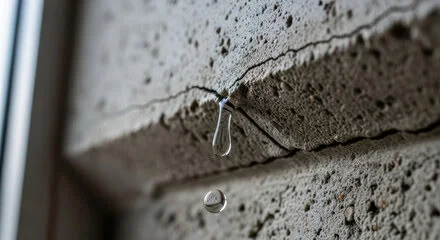
What differential settlement looks like in a DFW home includes diagonal cracks running from the corners of door and window frames, horizontal cracks along mortar lines in brick veneer, floors that feel uneven when walking across them, doors and windows that stick or no longer close flush with their frames, and gaps appearing between walls and ceilings or walls and floors. These are not cosmetic issues. They are structural signals.
The DFW clay soil factor accelerates this progression compared to stable soil regions. The same volume of water escaping under a slab in sandy soil disperses gradually with less foundation impact. In Dallas County clay that same water volume produces faster and more pronounced differential movement because the clay responds more dramatically to moisture change.
Foundation cracks appearing alongside any other sign on this list — a warm floor spot, a water bill spike, or running water sounds — are a strong combined indicator of an active slab leak. At that point professional detection is not optional. Our foundation leak detection and pipe repair service uses non-invasive equipment to locate the leak before any concrete is touched.
Warning Sign 6 — Mold or Mildew Smell Without a Visible Source
A persistent mold or mildew odor in a room with no visible moisture source is one of the most commonly dismissed slab leak signs. It appears before visible mold growth in most cases which is why homeowners attribute it to humidity, poor ventilation, or surface condensation rather than a leak beneath the floor.
How moisture from a slab leak reaches wall cavities follows the path of least resistance. Water escaping beneath the slab wicks upward through concrete and into the flooring material above it. From there it migrates into the wall cavity at the floor line where it contacts wood framing, insulation, and drywall — all materials that support mold growth when sustained moisture is present. The moisture does not need to be visible on the surface for mold conditions to exist inside the wall.
How long mold takes to develop in North Texas conditions is faster than most homeowners expect. DFW humidity levels combined with the warm temperatures that persist through most of the year create conditions where mold begins developing on wet organic material within 24 to 48 hours. A slab leak that has been active for two weeks in a DFW home has had sufficient time and moisture to produce mold growth inside wall cavities well before any odor reaches the living space.
Why the odor precedes visible growth is straightforward. Mold growing inside a wall cavity releases spores and volatile organic compounds that pass through drywall and flooring gaps into the living space. The smell arrives before the visible colony because the colony is behind the wall not on it.
Do not attribute a persistent mold smell in a ground floor room to surface humidity or seasonal condensation without ruling out a slab leak first. A smell that returns after cleaning or airing out the room is not a surface moisture problem.
Warning Sign 7 — Your Hot Water Heater Runs Constantly
A water heater that runs continuously or cycles far more frequently than it used to is not always a water heater problem. In a DFW home with slab-embedded hot water supply lines it is often a slab leak symptom that gets misdiagnosed as equipment failure.
How a slab leak causes constant water heater cycling is a direct mechanical consequence. When a hot water supply line cracks beneath the slab heated water escapes at the leak point before reaching any fixture. The water heater sensor detects that the tank temperature has dropped — because hot water is leaving the system continuously — and fires the burner to reheat. The tank reheats. More hot water escapes through the leak. The temperature drops again. The burner fires again. That cycle repeats continuously as long as the leak is active driving up energy bills alongside water bills simultaneously.
How to confirm it is leak-related rather than normal recovery cycling requires observation. A water heater in normal operation fires periodically to maintain tank temperature and recovers after hot water use. It does not run in long continuous cycles with no hot water fixture in use. Turn off every hot water fixture in the home and observe whether the water heater continues cycling. If it fires repeatedly with no hot water demand the tank is compensating for loss somewhere in the hot water supply system.
The DFW hard water complication means constant water heater running in an older North Texas home has two possible causes that should both be assessed simultaneously. Hard water scale buildup reduces heating efficiency and causes the burner to run longer to reach the target temperature — a problem covered in detail in our hard water guide. A slab leak causes the burner to run more frequently. Both conditions can exist in the same water heater at the same time. A licensed plumber assesses both during the same visit.
What to Do When You Notice One or More of These Signs
One sign from this list warrants attention. Two or more signs appearing together warrant immediate action. Here is the exact sequence to follow.
Step 1 — Document what you are seeing and when it started
Note which signs are present, where in the home they appear, and when you first noticed each one. A warm spot on the floor in the master bedroom that appeared three weeks ago alongside a water bill that increased last month is a pattern a licensed plumber can use to narrow the likely leak location before arriving. Documentation costs nothing and saves time on the service call.
Step 2 — Check your water meter for active loss
Turn off every fixture and appliance. Check the meter. Wait 30 minutes without using any water. Check again. A meter that has moved confirms active water loss somewhere in your supply system and removes any remaining doubt that a professional assessment is needed.
Step 3 — Use our free diagnostic tool to organize your symptoms
Our plumbing diagnostic tool walks you through a structured set of questions about what you are experiencing and produces a summary you can reference when you call. It helps a licensed plumber arrive prepared for your specific combination of signs rather than starting from scratch.
Step 4 — Call a licensed plumber for professional detection equipment assessment
Electronic acoustic detection, thermal imaging, and pressure testing locate a slab leak precisely without breaking any concrete. Our foundation leak detection and pipe repair service uses all three methods before any repair recommendation is made.
Step 5 — Do not break the floor or attempt excavation before detection confirms the location
Breaking concrete at the wrong location adds $500 to $1,500 in unnecessary repair cost to an already expensive job. Professional detection equipment eliminates that risk entirely by identifying the leak location within inches before any concrete is touched.
How Much Does Catching a Slab Leak Early Save
The financial case for acting on the first sign rather than waiting for confirmation from multiple signs is straightforward. Early detection and repair costs a fraction of what delayed detection produces once structural damage is involved.
Early detection cost runs $150 to $400 for a professional inspection using acoustic, thermal, and pressure testing equipment. That cost is applied toward the repair in most cases.
Early repair cost runs $1,500 to $5,000 depending on whether spot repair, rerouting, or epoxy lining is the appropriate method for the specific leak location and pipe condition. At this stage the damage is contained to the pipe itself. The foundation, flooring, and wall cavities are intact.
Late detection cost — when a slab leak has been active long enough to produce foundation cracks, mold growth inside wall cavities, or flooring damage — runs $8,000 to $20,000 or more. That figure combines the same repair cost from the early detection scenario with water extraction, mold remediation, drywall replacement, flooring replacement, and in severe cases foundation repair. Each category adds cost that did not exist when the first sign appeared.
The cost difference between catching a slab leak at the first sign versus responding after structural damage has occurred is almost always $5,000 to $15,000 in avoidable expense. That gap represents the real cost of dismissing a warm floor spot, attributing a water bill spike to a rate change, or waiting for a second sign before calling a plumber. Use our plumbing cost estimator to see what early repair costs in your specific DFW city before you call.
Every sign covered in this article appears before structural damage in most slab leak cases — which means every sign is an opportunity to act before the repair cost multiplies. A single unexplained symptom in a DFW home built before 1990 is enough to warrant a professional detection assessment. A licensed plumber with the right equipment can confirm or rule out a slab leak in a single visit and give you a written repair price before any floor is touched.