How Long Does a Water Heater Last in Texas — The Hard Water Effect Every DFW Homeowner Should Know
The national average lifespan for a tank water heater is 15 to 20 years. In North Texas that number drops to 10 to 15 years because NTMWD and Dallas Water Utilities hard water has been depositing mineral scale inside the tank, on the heating element, and around every connection since the day the unit was installed. A significant share of DFW homeowners are operating water heaters that are past their reliable service life right now — paying higher energy bills, getting inconsistent hot water, and moving closer to a failure that will flood the utility room with no warning. This article explains exactly what shortens a water heater’s life in North Texas and how to know where your unit stands before it fails.
What Is the Average Water Heater Lifespan in Texas
The national average lifespan for a residential tank water heater is 15 to 20 years under normal operating conditions in average water hardness areas. North Texas is not an average water hardness area.
In DFW homes served by NTMWD or Dallas Water Utilities the realistic lifespan for a tank water heater is 10 to 15 years. Some units fail at 8 to 10 years when hard water damage compounds on a system that has never been flushed or maintained. The 5 to 10 year gap between the national average and the North Texas reality is not a manufacturing defect or an installation problem. It is the direct consequence of hard water mineral content acting on the unit continuously from day one.
The US Department of Energy documented that a quarter inch of mineral scale on a water heater heating element reduces efficiency by up to 40 percent. In practical terms for a DFW homeowner that means a 10 year old water heater with significant scale accumulation may be consuming 40 percent more energy than it did when new to produce the same amount of hot water. That efficiency loss appears on the energy bill every month without any obvious connection to the water heater causing it.
Tankless water heaters last longer in North Texas — 20 to 25 years with proper maintenance — because they have no storage tank for sediment to accumulate in. However they are not immune to hard water damage. Scale deposits on the heat exchanger reduce efficiency and require more frequent descaling service in DFW than manufacturers recommend for low-hardness water regions.
The lifespan difference between tank and tankless in a hard water environment is real and meaningful. For the full comparison read our tank vs tankless guide for North Texas homeowners.
How Hard Water Shortens Water Heater Life in DFW
Hard water shortens water heater life through two simultaneous mechanisms that compound on each other over the unit’s service life. Understanding both explains why DFW water heaters fail years earlier than the national average suggests they should.
Scale accumulation on the heating element and tank floor is the primary mechanism. Every gallon of hard water heated in the tank deposits a small amount of dissolved calcium and magnesium on the heating element and the tank interior. Individually those deposits are microscopic. Collectively over 10 to 15 years they form a scale layer thick enough to insulate the heating element from the water it is trying to heat. The element compensates by running hotter and longer to reach the target temperature. That extended operation accelerates wear on the element, the thermostat, and the tank itself simultaneously.
Anode rod corrosion accelerates in hard water conditions. The anode rod is a sacrificial metal rod — typically magnesium or aluminum — suspended inside the tank to attract corrosive elements in the water before they attack the tank walls. In low-hardness water areas an anode rod lasts four to six years before requiring replacement. In North Texas hard water the rod corrodes significantly faster — often depleting in two to three years. A depleted anode rod leaves the tank walls directly exposed to the corrosive water chemistry that the rod was designed to intercept.
The combined effect of scale insulation and anode rod depletion operating together is what drives premature failure in DFW water heaters. Scale reduces efficiency and overworks the heating components. A depleted anode rod allows tank wall corrosion to begin. Both processes run simultaneously in a hard water environment and neither stops without intervention. NTMWD and Dallas Water Utilities water hardness levels ensure both mechanisms are active in every DFW home from the day the unit is installed.
A whole-home water softener stops both mechanisms at the source by removing the dissolved minerals before they enter the water heater. Read our hard water guide for North Texas homeowners for the full picture of what hard water does to every plumbing system in a DFW home.
Tank Water Heaters — What Shortens Their Life in North Texas
A tank water heater in a DFW home faces five failure mechanisms simultaneously. Most of them are preventable. Most DFW homeowners are not preventing them.
Scale buildup coats the heating element and tank interior continuously. As the scale layer thickens the element works harder to transfer heat through it. Efficiency drops. Energy consumption rises. The element runs at higher temperatures than it was designed for under normal scale-free conditions. That thermal stress accelerates every other failure mechanism on this list.
Anode rod failure removes the tank’s primary corrosion defense. Once the sacrificial rod is fully depleted the tank walls become the next target for the corrosive water chemistry the rod was intercepting. In North Texas hard water that transition happens faster than manufacturers account for in their maintenance schedules. A tank with a depleted anode rod in DFW hard water begins corroding from the inside within months of depletion.
Sediment accumulation at the tank bottom produces the popping and rumbling sounds that many DFW homeowners hear from aging water heaters. Mineral deposits and debris settle on the tank floor over years of operation. When the burner fires that trapped sediment layer superheats and forces steam pockets through it. The sounds are sediment being disturbed under heat. By the time a water heater produces these sounds regularly significant sediment accumulation is already present.
Thermostat and heating element failure result directly from the overworking caused by scale insulation. An element running hotter and longer than designed burns out faster than its rated service life. A thermostat cycling more frequently than normal wears out ahead of schedule. Both components can be replaced but in a unit over 12 years old replacement repairs the symptom while the underlying scale and sediment problem continues.
Corrosion at supply connections develops where hard water mineral deposits concentrate at threaded fittings and flexible connector joints. Over time that corrosion produces slow drips at connections that worsen and can cause fitting failure if not addressed.
Most of these failure mechanisms respond to proper maintenance. Annual flushing removes sediment. Anode rod inspection and replacement every two to three years maintains corrosion protection. A water softener stops scale accumulation at the source. A DFW homeowner who maintains their water heater correctly adds three to five years to its service life compared to one who runs it without any maintenance.
Tankless Water Heaters — Do They Last Longer in Hard Water Areas
Yes. A tankless water heater lasts longer than a tank unit in a North Texas hard water environment — but only with maintenance that most manufacturers do not emphasize loudly enough for DFW conditions.
How scale affects tankless units differently comes down to where the damage concentrates. A tank water heater accumulates scale on the heating element and sediment on the tank floor. A tankless unit has no storage tank so neither of those failure points exists. Instead scale deposits on the heat exchanger — the component that transfers heat from the burner to the water passing through it. A scaled heat exchanger works harder to transfer the same amount of heat producing the same efficiency loss the DOE documented for tank units under scale accumulation.
Why descaling is required more frequently in DFW than manufacturer schedules suggest is a direct consequence of NTMWD and Dallas Water Utilities water hardness. Most tankless manufacturers recommend annual descaling as a general guideline. That schedule assumes a moderate water hardness level. In hard to very hard water areas like DFW the heat exchanger accumulates scale faster than the annual schedule accounts for. A tankless unit in a DFW home without a water softener may require descaling every six to nine months to maintain full efficiency and prevent heat exchanger damage.
The lifespan advantage is real and significant despite the maintenance requirement. A properly maintained tankless water heater in a North Texas home lasts 20 to 25 years compared to 10 to 15 years for a tank unit receiving the same hard water supply. That 10 year lifespan advantage combined with lower energy consumption from on-demand heating makes tankless a financially sound choice for most DFW homeowners replacing an aging tank unit. For the full comparison of both options in a North Texas context read our tank vs tankless guide.
How to Tell If Your Water Heater Is Approaching End of Life
Most water heater failures in DFW homes are not sudden. They are preceded by signs that appear weeks or months before the unit fails completely. Knowing what to look for allows a replacement decision to be made on a planned timeline rather than under emergency pressure.
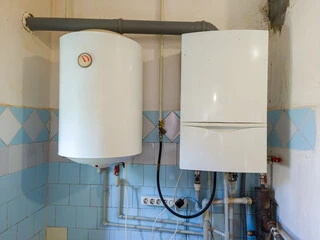
Age is the most reliable indicator. A tank water heater in a DFW home over 12 years old is past its statistically reliable service window regardless of whether any other signs are present. Find your unit’s manufacture date from the serial number on the rating plate — typically located on the upper portion of the tank. Serial number formats vary by manufacturer but most encode the manufacture date in the first four characters. Bradford White uses a letter followed by a number for month and year. American Water Heaters uses a similar format. If the date is not immediately readable search the manufacturer name and serial number format online to decode it.
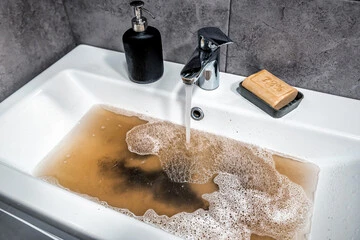
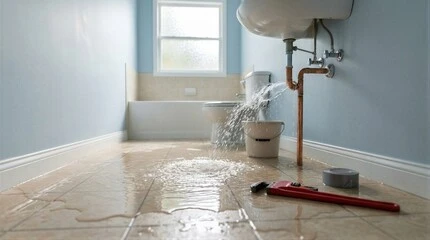
Physical signs that the unit is failing include rust-colored or discolored water at hot taps indicating internal tank corrosion has begun, visible corrosion or rust staining around the tank body or at supply connections, and pooling water around the base of the unit from a tank seam or connection leak. Any of these signs on a unit over 10 years old in a DFW home warrants immediate replacement assessment rather than repair.
Performance signs include hot water that takes significantly longer to recover between uses than it did previously, inconsistent water temperature that fluctuates during a shower or drops unexpectedly, and a unit that runs continuously without achieving or maintaining the target temperature.
Sound signs — popping, rumbling, or banging during heating cycles — indicate sediment and scale accumulation on the tank floor has reached the point where the burner is actively disturbing it during operation. A water heater making these sounds regularly in a DFW home over 10 years old is in the final stage of its reliable service life.
A water heater showing two or more signs from any category above in a North Texas home over 10 years old should be assessed by a licensed plumber immediately. At that age and condition profile repair extends a failing unit’s life temporarily while replacement resolves the problem permanently.
Repair or Replace — How to Make the Right Decision for a DFW Home
The repair versus replace decision for a water heater in a DFW home follows two rules that apply regardless of brand, tank size, or fuel type.
The age threshold is the first filter. A water heater under 8 years old in a DFW home is a repair candidate for most component failures. A unit over 12 years old is a replacement candidate for most component failures. The 8 to 12 year middle range requires the second filter.
The 50 percent rule is the second filter. If the cost of a repair exceeds 50 percent of the cost of a new unit installed, replace. A $600 repair on a unit that costs $1,100 to replace installed is not a financially sound decision — particularly in a hard water environment where the repaired unit continues degrading at the same rate after the repair is complete.
Repairs worth making on units within the age and cost thresholds include heating element replacement, thermostat replacement, and anode rod replacement. These are component failures that do not indicate tank structural failure and are cost-effective on units under 10 years old with no physical signs of tank corrosion.
Repairs not worth making include any repair on a unit showing tank corrosion, rust-colored water from internal wall deterioration, or pooling water from a tank seam failure. These are structural failures that no component repair addresses. A new valve or element on a corroding tank buys weeks or months at most before the tank fails completely — often catastrophically with significant water damage.
The hard water accelerator is the factor that makes the DFW repair decision different from the national standard guidance. A repaired water heater in a North Texas hard water home does not return to normal degradation after repair. Scale accumulation, anode rod corrosion, and sediment buildup continue at exactly the same rate as before the repair. The repaired component may function correctly while every other component continues toward failure on the same timeline the hard water established from day one.
Our water heater repair and replacement service provides a written assessment of your specific unit’s condition and a flat-rate price for both repair and replacement options before any work begins.
How to Extend Your Water Heater’s Life in North Texas
A water heater in a DFW home that receives no maintenance will reach the lower end of the North Texas lifespan range — 8 to 10 years. The same unit with consistent maintenance reaches the upper end — 13 to 15 years for a tank unit. That difference represents thousands of dollars in delayed replacement cost.
Annual tank flushing removes sediment and mineral deposits that accumulate on the tank floor each year. Connect a garden hose to the drain valve at the base of the tank, run it to a floor drain or outside, and flush until the water runs clear. Annual flushing slows scale accumulation, reduces the popping and rumbling sounds that indicate sediment buildup, and helps the heating element maintain contact with water rather than firing through an insulating layer of deposits.
Anode rod inspection every two to three years is the single most important maintenance task for a DFW water heater. In North Texas hard water an anode rod depletes faster than the standard four to six year national recommendation. Inspect the rod at two to three years and replace it before it depletes completely. A new anode rod costs $30 to $60 in materials and takes less than an hour to replace. Allowing it to deplete entirely exposes the tank walls to unprotected corrosion that ends the unit’s service life.
Water softener installation stops scale accumulation at the source before hard water enters the water heater. A whole-home softener is the most impactful single change a DFW homeowner can make to extend water heater life. It eliminates the primary failure mechanism entirely rather than managing its consequences after the fact. Our water filtration and softener installation service covers system sizing and installation for any North Texas home.
Temperature setting at 120 degrees is the EPA and Department of Energy recommended setting for residential water heaters. It is hot enough to prevent bacterial growth and deliver comfortable hot water while reducing the thermal stress on the heating element and tank that higher temperature settings accelerate. Many DFW water heaters arrive from installation set at 130 to 140 degrees. Lowering to 120 degrees reduces energy consumption and extends component life simultaneously.
Expansion tanks are required by plumbing code in many DFW municipalities for homes with closed plumbing systems — where a backflow preventer or pressure reducing valve prevents expanded water from returning to the municipal supply line. Without an expansion tank thermal expansion pressure cycles stress the tank and connections with every heating cycle. Confirm with a licensed plumber whether your home requires one. Many older DFW homes have closed systems without expansion tanks installed.
How Much Does Water Heater Replacement Cost in DFW
Water heater replacement cost in North Texas breaks down by unit type and size. These are real DFW market numbers including equipment and installation.
Standard 40 to 50 gallon gas tank units — the most common residential replacement in the DFW market — run $950 to $1,500 installed. This range covers the unit, standard connections, and permit filing where required.
Larger tank units — 75 to 80 gallon gas tanks for larger homes or high-demand households — run $1,200 to $2,000 installed depending on unit capacity and any modification to existing connections required by the larger unit footprint.
Tankless gas units run $1,500 to $2,800 installed depending on the system capacity required for the home’s square footage and hot water demand. Tankless installations in homes converting from tank units may require gas line upsizing and venting modifications that affect the final cost.
What drives cost variation in DFW installations beyond unit type is primarily the condition of existing connections. Hard water mineral deposits accumulate on supply line fittings, flexible connectors, and shutoff valves over the life of the old unit. Corroded or scaled fittings require replacement at the time of water heater installation. A straightforward replacement in a home with clean connections runs toward the lower end of each range. A replacement in a home where the existing connections show significant hard water damage runs toward the upper end.
Why DFW installations sometimes run above national averages is that same hard water damage to existing connections and fittings. A national average replacement cost assumes clean accessible connections in average condition. North Texas hard water produces connection deterioration that adds labor and materials to what would otherwise be a standard swap.
Use our plumbing cost estimator to get a realistic number for your specific home size, unit type, and DFW city before calling anyone.
Water heater lifespan in North Texas is shorter than the national figures most homeowners reference and significantly shorter than what a well-maintained unit in a low-hardness water region achieves. A licensed plumber can assess your specific unit’s condition, tell you how much reliable service life remains, and give you a written replacement price — all in a single visit — before a tank failure makes the decision for you at the worst possible time.