Tank vs Tankless Water Heater — Which Is Right for a North Texas Home
Most DFW homeowners face the tank versus tankless decision for the first time when their existing water heater fails — under time pressure, without hot water, and without the information needed to make a confident choice. This article is the guide to read before that moment arrives. Both tank and tankless water heaters work in North Texas homes but they work differently, cost differently, and require different maintenance in a hard water environment. The right choice depends on your specific home, budget, and long-term plans.
What is the difference between a tank and tankless water heater in Texas?
A tank water heater stores 40 to 80 gallons of heated water continuously and costs less upfront but lasts only 10 to 15 years in North Texas hard water conditions. A tankless water heater heats water on demand with no storage tank, costs more to install, and lasts 20 to 25 years in the same conditions with proper maintenance. In DFW hard water areas the tankless unit has a lower long-term cost of ownership despite the higher upfront price.
How a Tank Water Heater Works — and Where It Struggles in DFW
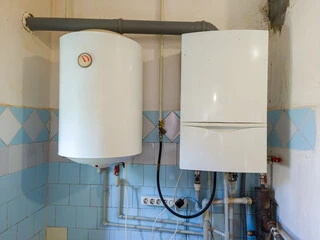
A tank water heater maintains a stored supply of hot water — typically 40 to 80 gallons — at a set temperature around the clock. The burner or heating element fires periodically to replace heat lost through the tank walls even when no hot water is being used. That continuous standby heating accounts for 15 to 20 percent of a typical household’s energy consumption according to the US Department of Energy.
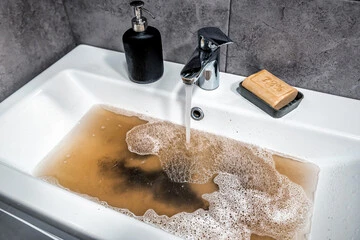
In a low-hardness water area a tank unit is a reliable and cost-effective system. In DFW it faces two hard water challenges that reduce its efficiency and shorten its service life simultaneously. Mineral scale accumulates on the heating element and tank floor with every gallon of NTMWD or Dallas Water Utilities water heated. That scale insulates the element from the water it is heating forcing it to run hotter and longer to reach the target temperature. Anode rod corrosion accelerates in hard water conditions leaving the tank walls unprotected faster than the standard maintenance schedule accounts for.
The combined effect shortens the reliable service life of a tank water heater in North Texas to 10 to 15 years — compared to the national average of 15 to 20 years in moderate hardness water areas. Some DFW tank units fail at 8 to 10 years when hard water damage compounds on a system that has never been flushed or maintained. For the full breakdown of what hard water does to tank units over time read our water heater lifespan guide for North Texas homeowners.
How long does a tank water heater last in Texas?
A tank water heater in Texas lasts 10 to 15 years on average due to hard water scale accumulation from NTMWD and Dallas Water Utilities supply — significantly shorter than the national average of 15 to 20 years in moderate hardness water areas. Hard water deposits mineral scale on the heating element continuously reducing efficiency and accelerating failure. Annual flushing and anode rod maintenance extends the lifespan toward the upper end of that range.
How a Tankless Water Heater Works — and What It Requires in DFW
A tankless water heater heats water on demand rather than storing it. When a hot water tap opens cold water flows through the unit across a heat exchanger that brings it to the target temperature instantly. When the tap closes heating stops. There is no tank to maintain, no standby heat loss, and no finite supply of stored hot water that runs out during back-to-back showers or simultaneous fixture use.
The energy efficiency advantage is direct and measurable. Because the unit only fires when hot water is needed it does not consume energy maintaining a stored supply around the clock. The US Department of Energy estimates tankless water heaters are 24 to 34 percent more energy efficient than tank units for households using 41 gallons or less of hot water daily. In larger households the efficiency advantage is somewhat smaller but still present.
Where tankless units struggle in DFW is the heat exchanger. Hard water from NTMWD and Dallas Water Utilities deposits mineral scale on the heat exchanger surface with every gallon of water heated. That scale reduces the heat exchanger’s ability to transfer heat efficiently — the same efficiency loss mechanism that affects tank unit heating elements. The difference is location not mechanism. Scale on a heat exchanger is addressed through descaling rather than flushing but the hard water source of the problem is identical.
In low-hardness water areas manufacturers recommend annual descaling. In DFW hard water conditions that schedule is insufficient. A tankless unit in a North Texas home without a water softener requires descaling every six to nine months to maintain full heat exchanger efficiency and prevent accelerated wear on internal components.
With proper DFW-specific maintenance a tankless water heater lasts 20 to 25 years — a meaningful lifespan advantage over the 10 to 15 year tank unit reality in the same hard water environment.
How long does a tankless water heater last in Texas?
A tankless water heater in Texas lasts 20 to 25 years with proper maintenance — approximately 10 years longer than a tank unit in the same North Texas hard water conditions. Hard water scale accumulates on the heat exchanger rather than the tank floor and requires descaling every six to nine months in DFW to maintain efficiency and lifespan. A whole-home water softener paired with a tankless unit significantly reduces descaling frequency and extends the unit’s service life.
Tank vs Tankless — The 6 Key Differences Every DFW Homeowner Should Know
What are the main differences between tank and tankless water heaters in Texas?
In North Texas the six key differences between tank and tankless water heaters are upfront cost, operating cost, lifespan in hard water conditions, hot water supply capacity, maintenance requirements, and space footprint. Tank units cost less upfront but fail sooner in DFW hard water. Tankless units cost more to install but last nearly twice as long and deliver unlimited hot water on demand.
1. Upfront Cost
Tank units cost $950 to $2,000 installed in DFW depending on size. Tankless units cost $1,500 to $2,800 installed for a standard gas unit — more if gas line upsizing or venting modification is required when switching from a tank system. The upfront cost gap is real. Whether it matters depends on how long you plan to stay in the home and how you weigh installation cost against long-term operating savings.
2. Operating Cost
Tank units consume energy continuously to maintain stored water temperature. Tankless units consume energy only when hot water is demanded. The US Department of Energy estimates tankless units are 24 to 34 percent more energy efficient for average households. At current DFW energy rates that difference typically translates to $100 to $300 in annual energy savings depending on household hot water usage.
3. Lifespan in DFW Hard Water
Tank units last 10 to 15 years in North Texas hard water conditions. Tankless units last 20 to 25 years with proper maintenance in the same conditions. Over a 20-year period a DFW homeowner with a tank unit replaces it once or twice. A homeowner with a properly maintained tankless unit replaces it once if at all.
4. Hot Water Supply
A tank unit delivers hot water until the stored supply is exhausted. A 50 gallon tank serving a household with simultaneous shower, dishwasher, and laundry demand can run out mid-use. A tankless unit heats water continuously on demand with no stored supply to exhaust. Back-to-back showers, simultaneous appliance use, and high-demand households do not stress a properly sized tankless system the way they stress a tank unit.
5. Maintenance in DFW Hard Water
Tank units require annual flushing to remove sediment and anode rod inspection every two to three years — more frequently than the national standard recommendation given DFW hard water acceleration. Tankless units require descaling every six to nine months in North Texas hard water conditions — more frequently than manufacturer schedules designed for low-hardness water areas. Neither system is maintenance-free in DFW. The maintenance tasks are different not absent.
6. Space Requirement
A tank unit requires floor space — typically 16 to 24 inches in diameter and 50 to 60 inches tall. A tankless unit mounts on a wall and occupies a fraction of the space. In DFW homes where garage or utility room space is limited the tankless footprint advantage is meaningful. In homes with dedicated water heater closets the space difference is less relevant.
Quick Summary — Tank vs Tankless in DFW
- Tank costs less upfront. Tankless costs less over time.
- Tank lasts 10 to 15 years in DFW hard water. Tankless lasts 20 to 25 years.
- Tank runs out of hot water. Tankless never does.
- Both require maintenance in hard water — different tasks, similar discipline.
- Tankless saves $100 to $300 annually in energy costs at DFW rates.
- Tankless requires gas line assessment before installation — not a direct swap.
Which DFW Homes Are Best Suited for a Tank Water Heater
A tank water heater is still a practical and appropriate choice for a significant share of DFW homeowners. It is not the default inferior option — it is the right option for specific home profiles and budget situations.
Budget-conscious replacements where the priority is restoring hot water quickly at the lowest upfront cost are the strongest case for a tank unit. A standard 40 to 50 gallon gas tank replacement in DFW runs $950 to $1,500 installed — significantly less than a tankless installation and available for same-day replacement in most cases. When a water heater fails unexpectedly and cost is the primary constraint a tank unit delivers reliable hot water at a known price without the additional assessment and potential gas line work a tankless conversion requires.
Homes with existing gas connections sized for tank units avoid the gas line upsizing cost that tankless conversions frequently require. A home where the existing gas line is already at its capacity for the current tank unit will need line upsizing to support a tankless unit’s higher BTU demand — adding $300 to $800 or more to the installation cost. In that scenario the upfront cost gap between tank and tankless widens significantly.
Smaller homes or lower hot water demand households — one to two person households, smaller square footage properties, or homes where simultaneous hot water demand is consistently low — may never experience the supply limitations of a tank unit. The unlimited on-demand supply advantage of tankless is less meaningful when a 40 gallon tank consistently meets the household’s actual demand.
Homeowners planning to sell within five years may not remain in the home long enough to recover the tankless installation premium through energy savings. The break-even point for a tankless installation in DFW typically runs five to eight years. A homeowner with a shorter time horizon captures more value from a quality tank replacement.
Older DFW neighborhoods in Garland, Richardson, and Mesquite replacing a failed tank unit like for like benefit from straightforward installations that use existing connections, existing venting, and existing gas line sizing without modification. A direct tank-to-tank replacement in these homes is faster, less disruptive, and less expensive than a tankless conversion in the same location.
Is a tank water heater still a good choice in Texas?
Yes. A tank water heater is still a practical choice for DFW homeowners prioritizing lower upfront cost, straightforward installation, or shorter ownership timelines. It lasts 10 to 15 years in North Texas hard water conditions with proper maintenance and delivers reliable hot water for households with moderate demand. For homeowners planning to stay in the home long term and willing to invest in a tankless system the lifespan and energy savings advantage favors tankless — but tank remains a sound choice for the right homeowner profile.
Which DFW Homes Are Best Suited for a Tankless Water Heater
A tankless water heater delivers its full financial and performance advantage to a specific homeowner profile. The further your situation matches this profile the stronger the case for tankless becomes.
Larger homes with higher simultaneous hot water demand are where tankless performance advantage is most pronounced. A home with three or more bathrooms where morning routines involve back-to-back showers alongside dishwasher and laundry cycles regularly exhausts a tank unit’s stored supply. A properly sized tankless unit handles that simultaneous demand without recovery time because it heats water continuously on demand rather than drawing from a finite stored supply.
Homeowners planning to stay in the home 10 or more years capture the full financial advantage of a tankless installation. The break-even point on the tankless cost premium over a tank replacement typically runs five to eight years in DFW through combined energy savings and delayed replacement cost. Homeowners beyond that window continue saving on energy and avoid the replacement cost a tank unit would require at the 10 to 15 year mark.
New construction in Frisco, McKinney, and the master-planned communities along the SH-121 and US-75 corridors increasingly specifies tankless as the standard water heater installation. These homes are designed with gas line sizing and venting that accommodates tankless from the start — eliminating the conversion costs that retrofits in older homes produce. A homeowner in a post-2010 DFW new construction home switching to tankless on replacement faces fewer installation complications than a homeowner in a 1975 Garland home making the same switch.
Homeowners with a whole-home water softener already installed are in the best possible position for a tankless unit in North Texas. A water softener removes the dissolved calcium and magnesium before it reaches the heat exchanger eliminating the primary hard water failure mechanism. A tankless unit in a softened water home approaches its full 20 to 25 year service life with significantly less descaling maintenance than the same unit receiving unsoftened NTMWD supply.
Homeowners prioritizing energy efficiency and lower long-term operating cost over minimizing upfront expense consistently find tankless the better financial decision over a 10 to 20 year ownership window. The $100 to $300 annual energy savings combined with the extended replacement timeline produces a total cost of ownership advantage that compounds over the life of the unit.
Is a tankless water heater worth it in Texas?
Yes — for the right homeowner profile. A tankless water heater in a North Texas home lasts 20 to 25 years compared to 10 to 15 years for a tank unit in the same hard water conditions and saves $100 to $300 annually in energy costs at DFW rates. The higher upfront installation cost typically breaks even within five to eight years through energy savings and delayed replacement. Homeowners planning to stay in their home long term and willing to maintain the unit in hard water conditions consistently find tankless worth the investment.
The Hard Water Factor — How NTMWD Water Affects Both Systems
Hard water from NTMWD and Dallas Water Utilities does not discriminate between tank and tankless water heaters. Both systems receive the same dissolved calcium and magnesium with every gallon of water they heat. The damage mechanism differs by system type. The source and the consequence do not.
How hard water affects tank units has been covered in detail throughout this article and in our water heater lifespan guide. Scale accumulates on the heating element and tank floor. Efficiency drops. The anode rod depletes faster. The tank corrodes from the inside once the rod is gone. The reliable service life in DFW drops to 10 to 15 years regardless of brand or installation quality.
How hard water affects tankless units follows the same mineral deposit process at a different location. Scale accumulates on the heat exchanger — the component that transfers heat from the burner to the passing water. A scaled heat exchanger works harder to transfer the same amount of heat producing efficiency loss and accelerated component wear. Without regular descaling that scale layer thickens until heat transfer is significantly compromised and the heat exchanger requires replacement — the most expensive repair a tankless unit faces.
Why a water softener changes the calculus for both systems is straightforward. A whole-home water softener removes dissolved calcium and magnesium before water enters either system. With softened water a tank unit’s heating element accumulates no scale. The anode rod depletes at a normal rate. The tank approaches its full designed service life. A tankless unit’s heat exchanger stays clean. Descaling frequency drops from every six to nine months to once annually or less. Both systems perform closer to their designed specifications for significantly longer in softened water conditions.
The combination that produces the best long-term outcome in a DFW home is a tankless water heater paired with a whole-home water softener. The tankless unit delivers unlimited on-demand hot water and 20 to 25 year service life. The water softener eliminates the hard water damage mechanism that shortens that lifespan and increases maintenance frequency. Together they address the two biggest water heater challenges in North Texas simultaneously. Our water filtration and softener installation service and water heater repair and replacement service can be combined in a single planned installation visit.
Does hard water affect tankless water heaters in Texas?
Yes. Hard water from NTMWD and Dallas Water Utilities deposits mineral scale on the tankless heat exchanger with every gallon heated — reducing efficiency and requiring descaling every six to nine months in DFW conditions. A whole-home water softener eliminates this problem by removing dissolved minerals before they reach the unit. A tankless water heater paired with a water softener is the most effective long-term water heating solution for North Texas homes.
Installation Requirements — What Changes When You Switch From Tank to Tankless
Switching from a tank to a tankless water heater is not a direct swap. The installation requirements are different enough that a licensed plumber assessment before committing to tankless is not optional — it is the step that determines whether the quoted installation price is accurate or whether significant additional costs will appear after the work begins.
Gas line sizing is the most common installation surprise in tank-to-tankless conversions across DFW. A standard tank water heater operates at 30,000 to 50,000 BTU input. A tankless unit requires 150,000 to 200,000 BTU input to heat water on demand at the flow rates a household expects. Most existing gas lines serving a tank unit are not sized for that demand. Upsizing the gas line from the meter to the water heater location adds $300 to $800 or more to the installation cost depending on line length and access. A licensed plumber assesses existing gas line capacity before the tankless unit is ordered.
Venting requirements differ significantly between tank and tankless systems. Traditional tank units use atmospheric venting — a simple flue pipe that exhausts combustion gases by natural draft. Most tankless units use direct vent or power vent systems that require dedicated intake and exhaust pipes run through an exterior wall. If the existing venting cannot be adapted or extended to serve the tankless unit new penetrations through the exterior wall are required. In an older DFW home with brick veneer that penetration adds labor and material cost beyond the standard installation price.
Electrical requirements apply to hybrid heat pump water heaters and electric tankless units. Gas tankless units require only a standard 120V outlet for the control board. Electric tankless units require dedicated 240V circuits with amperage that most older DFW homes do not have available at the water heater location without panel upgrades
Space considerations favor tankless in almost every DFW installation. A tankless unit mounts on a wall and occupies roughly the space of a large electrical panel. The floor space freed by removing a tank unit in a garage or utility room is immediately reclaimed for storage or other use.
Permit requirements vary across DFW municipalities. Mesquite, Garland, Plano, Frisco, McKinney, and Richardson each maintain their own building department permit thresholds for water heater installations. A tankless installation that modifies gas lines or adds new exterior venting penetrations almost universally requires a permit regardless of city. A licensed plumber files the required permit before work begins.
The key message is consistent across every DFW tankless conversion. Get the assessment before the commitment. The assessment determines actual installation cost, identifies any gas line or venting modifications required, and produces a written flat-rate price that covers the complete job — not just the unit swap.
Tank vs Tankless Cost Comparison in DFW
How much does a tankless water heater cost compared to a tank unit in DFW?
A standard tank water heater in DFW costs $950 to $2,000 installed depending on size. A tankless gas unit costs $1,500 to $2,800 installed for a direct replacement — more if gas line upsizing or venting modification is required. The tankless upfront premium typically breaks even within five to eight years through energy savings and the extended 20 to 25 year service life that delays replacement cost by a decade compared to a tank unit.
Installation Cost — Tank
A standard 40 to 50 gallon gas tank replacement in DFW runs $950 to $1,500 installed including the unit, standard connections, and permit where required. Larger 75 to 80 gallon units run $1,200 to $2,000 installed. A direct tank-to-tank replacement using existing connections, existing venting, and existing gas line sizing is the most predictable installation cost in the water heater category — no hidden variables and no assessment required before pricing.
Installation Cost — Tankless
A standard gas tankless unit runs $1,500 to $2,800 installed for a home where the existing gas line and venting can support the conversion without modification. When gas line upsizing is required add $300 to $800. When new exterior venting penetrations are required add $200 to $500. A tankless conversion in an older DFW home where both modifications are needed can reach $3,500 to $4,000 installed — a significant gap from the base tankless price that only a pre-installation assessment reveals.
10-Year Operating Cost Comparison
Tankless units save $100 to $300 annually in energy costs at current DFW rates compared to tank units of equivalent capacity. Over 10 years that produces $1,000 to $3,000 in cumulative energy savings. Added to the replacement cost a tank unit requires at the 10 to 15 year mark — $950 to $1,500 for a standard replacement — the 10-year total cost of ownership comparison shifts meaningfully toward tankless for homeowners who stay in the home long enough to capture both benefits.
Break-Even Analysis
The tankless break-even point in DFW runs five to eight years for most standard conversions. A homeowner who pays $1,000 more upfront for tankless and saves $150 per year in energy breaks even at year seven. After year seven every annual energy saving is net financial advantage. At year 10 to 15 when a tank unit requires replacement the tankless homeowner avoids that cost entirely.
Use our plumbing cost estimator to calculate the actual cost difference for your specific home size, existing gas line condition, and DFW city before making the decision.
What to Ask a Licensed Plumber Before Deciding
No article — including this one — can tell you definitively whether tank or tankless is the right choice for your specific DFW home. That answer requires a physical assessment of your existing gas line, venting configuration, hot water demand, and plumbing layout. These are the five questions that assessment should answer before any purchasing decision is made.
Is my existing gas line sized for a tankless unit?
This is the first question because the answer determines whether the tankless installation cost matches the base price range or climbs significantly above it. A licensed plumber measures existing gas line diameter and calculates whether current capacity supports a tankless unit’s BTU demand at the water heater location. If it does not the upsizing cost is quantified before commitment.
Does my home’s hot water demand match tankless flow rate capacity?
A tankless unit is sized by flow rate — gallons per minute of hot water it can deliver simultaneously. A unit undersized for a home’s actual simultaneous demand produces temperature drops during peak use. A licensed plumber calculates your home’s peak demand based on fixture count and usage patterns and recommends the correct unit size before installation.
What is the installation cost difference for my specific home layout?
The base tankless price assumes standard conditions. Your garage layout, existing venting path, gas line routing, and exterior wall composition all affect actual installation cost. A written flat-rate estimate that accounts for your specific conditions is the only reliable cost figure for a tankless conversion.
Is a water softener recommended alongside the new unit?
In a DFW home receiving NTMWD or Dallas Water Utilities supply the answer is almost always yes — for both tank and tankless units. A licensed plumber confirms your current water hardness conditions and recommends whether softener installation should be combined with the water heater replacement in a single visit.
What permits are required in my city?
Permit requirements vary across DFW municipalities. A licensed plumber confirms what is required in your specific city and files it before work begins. Unpermitted water heater installations create complications at property sale and can void manufacturer warranties.
The right water heater decision for a DFW home is not a general recommendation. It is the answer to these five questions applied to your specific property.
Both tank and tankless water heaters work in North Texas homes — but they work best for different homeowner profiles, different budgets, and different hard water management situations. A licensed plumber with 70 years of DFW water heater experience can assess your specific home, answer all five questions above, and give you a written price for both options before you commit to either — so the decision is made with complete information rather than under the pressure of a failed unit and no hot water.