Cast Iron Sewer Lines in North Texas — When to Repair, When to Replace
Cast iron sewer lines installed in DFW homes built before 1985 are now 40 to 70 years old and actively deteriorating in a large share of the homes that still have them. This is not a future maintenance concern. It is a current condition that is producing slow drains, recurring backups, sewage odors, and foundation stress in older Garland, Mesquite, and Richardson neighborhoods right now. The question most affected homeowners need answered is not whether their cast iron lines need attention — it is whether repair or full replacement is the right response to what a camera inspection actually shows.
What Are Cast Iron Sewer Lines and Which DFW Homes Have Them
Cast iron drain pipe is heavy metal pipe manufactured from molten iron poured into molds and used for residential drain and sewer systems from the early 1900s through the early 1980s. It was the universal residential drain pipe material in the United States for nearly eight decades. If your home was built before 1985 and has never had its drain system replaced, cast iron is almost certainly what is running beneath your slab and through your walls.
What cast iron looks like is distinctive once you know what to look for. The pipe is dark grey to black, heavy enough that a short section requires two hands to lift comfortably, and connected at joints using a hub and spigot system where one end of each pipe section fits inside a bell-shaped socket on the next. In older installations those joints were sealed with lead and oakum packing. The pipe surface is rough and slightly porous compared to the smooth interior of modern PVC.
Why cast iron was used comes down to the absence of alternatives. Plastic drain pipe — PVC — was not widely adopted in residential construction until the mid-1970s and did not fully replace cast iron until the early 1980s. Before that cast iron was the only code-compliant drain material available for residential construction. Builders used it not because it was the best long-term option but because it was the only option. Every home built in the DFW metro before 1975 received cast iron drain lines as a matter of course.
The DFW cities with the highest concentration of cast iron drain systems are the ones that saw their largest residential growth before 1985. Garland built extensively through the 1960s and 1970s. Richardson developed its largest residential neighborhoods between 1955 and 1980. Mesquite’s pre-1985 housing stock along Gus Thomasson Road and the older neighborhoods near Buckner Boulevard all carry cast iron. Older sections of Plano near Spring Creek Parkway and the pre-1980 neighborhoods of west Plano also have significant cast iron exposure. These are not small pockets of older homes. They represent tens of thousands of properties across Dallas County with drain systems that are now well past the midpoint of their reliable service life.
How Cast Iron Sewer Lines Fail in North Texas
Cast iron sewer lines in DFW homes do not fail from a single cause. They fail from four simultaneous processes that compound on each other over decades until the system can no longer function reliably. Understanding each process explains why cast iron in North Texas deteriorates faster than the same age pipe in other regions of the country.
Internal corrosion is the baseline failure mechanism for all cast iron drain systems. Sewage flowing through the pipe produces hydrogen sulfide gas which converts to sulfuric acid on the pipe’s interior surface. That acid attacks the iron continuously over decades creating a progressively thinner and more porous pipe wall. In a low-hardness water region this process advances at a predictable rate. In North Texas it advances faster.
Scale buildup from NTMWD and Dallas Water Utilities hard water accelerates internal deterioration beyond what corrosion alone produces. Mineral deposits from hard water accumulate on the interior pipe surface alongside the corrosion products. That combined buildup narrows the pipe’s effective diameter, slows flow, and creates conditions where debris and grease accumulate faster than they would in a smooth clean pipe. A cast iron line with 40 years of combined corrosion and hard water scale is significantly more compromised than its age alone would suggest.
Root intrusion enters the picture as hub and spigot joints weaken with age. The lead and oakum packing that seals these joints degrades over decades allowing hairline gaps to develop. Tree roots follow moisture gradients and find those gaps with remarkable precision. Once inside a joint roots expand with the pipe’s interior as a guide, eventually filling sections of the line and causing complete blockages. North Texas neighborhoods with mature tree canopy — the established streets of Garland, Richardson, and older Mesquite — face higher root intrusion rates than newer subdivisions with younger landscaping.
Offset and grade loss from Dallas County clay soil movement adds a fourth failure mechanism unique to the North Texas environment. Expansive clay soil shifts sewer lines off their original downward slope as it swells and contracts with seasonal moisture changes. A cast iron line that was installed with the correct quarter inch per foot downward grade in 1968 may have sections running flat or slightly uphill today after 57 years of clay soil movement beneath it. A line that loses its grade stops draining by gravity and begins accumulating waste that should be moving downstream.
The compounding effect of all four mechanisms operating simultaneously in a single aging system is what makes cast iron sewer failures in DFW more complex than in most other markets. A plumber responding to a recurring backup in a 1972 Garland home is not dealing with one problem. They are dealing with four interacting problems in a pipe system that has been under stress from all of them for over 50 years.
Warning Signs Your Cast Iron Sewer Lines Are Failing
Cast iron sewer lines give more warning than polybutylene supply lines before they fail completely. The signs are recognizable if you know what to look for. Every sign below warrants attention. Multiple signs appearing together warrant immediate action.
Recurring drain backups throughout the house simultaneously are the most definitive symptom of a main sewer line problem rather than a localized fixture clog. When a single drain backs up the problem is usually in that fixture’s individual drain line. When multiple drains back up at the same time — toilets, tubs, and sinks throughout the house — the problem is in the main sewer line that all of them share. In a pre-1985 DFW home that shared line is almost certainly cast iron.
Slow drains in multiple fixtures that do not clear with standard drain cleaning indicate a system-wide restriction rather than a localized clog. If hydro jetting or snaking clears the drain but the problem returns within days or weeks the obstruction is structural — root intrusion, collapsed section, or severe scale buildup — not a simple accumulation that cleaning can permanently resolve.
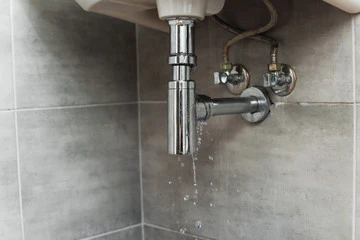
Sewage odors inside the home or in the yard above the sewer run indicate that the pipe is no longer fully sealed. Odors inside the home point to a failed joint or crack allowing sewer gas to escape into the structure. Odors in the yard above the known sewer line path indicate the pipe may have cracked or collapsed underground and sewage is reaching the soil surface.
Wet or unusually green patches in the yard above the sewer line path are a direct sign of active sewage leakage underground. The moisture and nutrients from a leaking sewer line produce accelerated grass growth in a narrow strip above the pipe. Many homeowners notice their lawn looks healthier in one specific area without connecting it to the sewer line running beneath it.
Foundation cracks near the sewer run from soil saturation are a more advanced sign that a sewer leak has been active long enough to change the moisture content of the surrounding soil. Sustained saturation in clay soil causes it to expand unevenly which stresses the foundation above it.
Drain cleaning that solves the problem temporarily but the problem returns within weeks is a pattern that points to structural damage rather than accumulated debris. A structurally sound cast iron line cleaned by hydro jetting should stay clear for months to years. A line with root intrusion through failed joints or a section running off grade will back up again regardless of how thoroughly it was cleaned because the underlying cause was not addressed.
Any single sign from this list warrants a camera inspection before any other work is done. Multiple signs appearing together warrant immediate inspection and should be treated as an active sewer system failure until the camera image proves otherwise.
The Camera Inspection — Why It Is the Only Reliable Assessment Tool
Every repair versus replace decision for a cast iron sewer line should start with a camera inspection. Not a visual check at the cleanout. Not a plumber’s estimate based on the home’s age and symptoms. A camera inserted into the line and run through the full sewer run to the city connection. Anything short of that is an opinion not an assessment.
What a sewer camera inspection involves is straightforward. A licensed plumber inserts a flexible cable with a waterproof camera head into the sewer line through an accessible cleanout or by removing a toilet. The camera transmits a live video feed of the pipe interior as it moves through the line. The plumber observes the feed in real time and can record the footage for documentation. The entire main sewer run from the home to the city connection is inspected in a single pass under normal circumstances.
What the camera reveals is the information that makes every subsequent decision possible. Internal corrosion level — how much wall thickness has been lost and whether the pipe surface is flaking or pitting actively. Root intrusion — where roots have entered, how extensively they have grown inside the line, and whether root mass is causing current blockage or future risk. Offset joints — where clay soil movement has shifted pipe sections out of alignment creating a step in the line that catches debris. Grade loss — sections running flat or uphill that cannot drain by gravity. Collapsed sections — areas where the pipe wall has failed completely and the line is fully or partially blocked by its own material.
Why visual inspection from the cleanout alone is insufficient is simple. A cleanout provides a view of approximately two to three feet of pipe interior. The sewer line runs 50 to 150 feet from the home to the city connection. The most serious deterioration in cast iron systems typically occurs in the middle sections of the run where root intrusion and grade loss concentrate — sections that are completely invisible from the cleanout opening without a camera.
How camera findings guide the repair versus replace decision is the direct output of the inspection. A camera image showing localized root intrusion in one section with otherwise intact pipe walls supports a targeted spot repair or trenchless lining recommendation. A camera image showing advanced corrosion throughout the run, multiple offset joints, and grade loss across several sections supports full replacement as the only cost-effective permanent solution.
Camera inspection cost in DFW runs between $150 and $350 for a standard residential main sewer line. That cost is applied toward any repair work that follows in most cases. It is the least expensive way to know with certainty what condition your cast iron sewer lines are actually in before committing to any repair or replacement expenditure.
The camera image is the only honest starting point for any cast iron sewer conversation. A plumber who recommends repair or replacement without one is quoting on assumptions not evidence.
Repair Options for Cast Iron Sewer Lines
Camera inspection findings determine which repair option is appropriate. There is no single correct answer for every cast iron sewer line in DFW. The right response depends on what the camera shows about the specific condition of the specific pipe in the specific home.
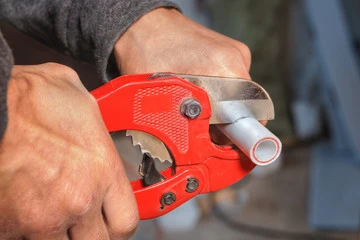
Spot repair is the targeted replacement of a single failed or failing section of cast iron pipe while leaving the remainder of the line intact. A plumber excavates at the location of the identified problem, removes the damaged section, and installs a new PVC section connected to the existing cast iron on both sides. Spot repair makes sense when the camera image shows localized damage — a single collapsed section, a badly offset joint, or a concentrated area of severe deterioration — in an otherwise intact system with good wall thickness and no significant grade loss throughout the rest of the run. It is the least expensive repair option and the most appropriate one when the problem is genuinely isolated.
Trenchless pipe lining — also called cured-in-place pipe or CIPP lining — rehabilitates the interior of an existing cast iron line without excavating the yard or driveway above it. A flexible liner saturated with resin is inserted into the existing pipe and inflated against the pipe walls. The resin cures in place creating a smooth new pipe surface inside the old cast iron shell. The result is a structurally sound interior that stops further corrosion, eliminates root intrusion through sealed joints, and restores the pipe’s hydraulic capacity. Trenchless lining makes sense when the camera shows moderate to significant deterioration across a longer section of the run — too extensive for spot repair but with enough remaining pipe structure to hold the liner in place. It costs more than spot repair but significantly less than full excavation and replacement. Our trenchless sewer repair service covers CIPP lining for qualifying cast iron systems throughout the DFW metro.
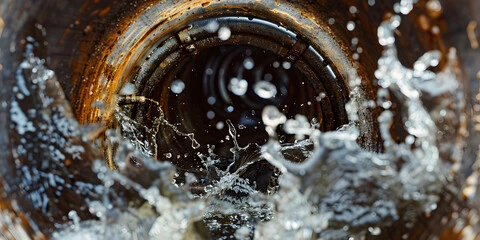
Hydro-jetting uses a high-pressure water stream to scour the interior of the cast iron line removing root mass, scale buildup, grease accumulation, and debris that restrict flow. It is not a structural repair. It restores flow in a structurally intact or minimally damaged system by removing what has accumulated inside it. Hydro jetting alone is appropriate when the camera shows early-stage root intrusion through joints that have not yet structurally failed and no significant corrosion thinning of the pipe wall. In that scenario clearing the line buys meaningful time before structural intervention is needed. When the camera shows structural damage hydro jetting clears the line temporarily but does not address the underlying failure. Our drain cleaning service includes hydro jetting for cast iron lines across all DFW service cities.
When Full Sewer Line Replacement Is the Right Answer
There is a point in every cast iron sewer line’s deterioration where repair stops being cost-effective and full replacement becomes the only financially rational choice. Camera inspection findings determine when that point has been reached. Three conditions consistently indicate that full replacement is the right answer.
Multiple failed sections throughout the run make spot repair uneconomical. If the camera shows three separate offset joints, two sections of advanced corrosion, and grade loss across 40 feet of the line, spot repairing each problem individually costs more in total than replacing the entire run with new PVC and eliminates only the identified problems while leaving deteriorating cast iron in place between them.
Severe deterioration throughout the run — thin pipe walls, active flaking, widespread internal pitting — indicates the cast iron has passed the point where lining or targeted repair provides lasting value. A severely deteriorated pipe cannot hold a CIPP liner reliably and will continue producing failures in unrepaired sections regardless of how many spot repairs are made.
Full or partial collapse of the pipe wall eliminates all repair options except full replacement. A collapsed section cannot be lined because the liner has no remaining pipe structure to conform to. Excavation and replacement of the collapsed section and any compromised pipe adjacent to it is the only resolution.
What full replacement involves depends on the site conditions and homeowner preference. Traditional excavation requires opening the yard or driveway above the sewer run, removing the cast iron, and installing new PVC at the correct grade. Trenchless replacement methods pull new pipe through the existing cast iron run without full excavation where site conditions allow. Both approaches produce the same result — a new PVC sewer line at the correct grade with smooth interior walls, watertight joints, and a service life of 50 to 100 years under normal conditions.
Timeline for full replacement runs one to three days for most residential main sewer lines in DFW depending on line length, depth, and access conditions. Longer runs and deeper installations take more time. Most homeowners find the disruption manageable when the work is planned in advance on their own schedule.
Cost for full sewer line replacement in DFW runs between $3,500 and $12,000 depending on line length, depth, access, and whether excavation or trenchless methods are used. A standard residential run of 60 to 80 feet typically falls between $4,500 and $8,000. Emergency replacement after a full collapse adds excavation urgency costs, potential sewage remediation, and temporary service interruption expenses that consistently push total costs above the planned replacement range.
Full replacement done proactively on a planned timeline with a written estimate is almost always less expensive than the same replacement performed under emergency conditions after a collapse that has already caused property damage.
How Dallas County Clay Soil Makes Cast Iron Sewer Problems Worse
Every cast iron sewer line in a DFW home faces the same internal deterioration processes that affect cast iron anywhere. What makes North Texas cast iron problems more complex than the same age pipe in most other regions is what is happening outside the pipe at the same time — expansive Dallas County clay soil that moves with every wet and dry season and has been doing so for the entire service life of the pipe.
How expansive clay soil shifts sewer lines off grade is a mechanical process that operates slowly but continuously. When Dallas County clay soil absorbs moisture it expands. When it dries out it contracts. That expansion and contraction cycle exerts lateral and vertical pressure on everything embedded in it including sewer lines. Over 40 to 60 years of seasonal cycling a cast iron sewer line that was installed with a precise downward grade can be shifted into a series of rises and dips that bear no resemblance to its original installation profile.
Why grade loss matters is fundamental to how a gravity drain system works. Residential sewer lines depend entirely on gravity to move waste from the home to the city connection. The standard installation grade of one quarter inch of drop per foot of pipe length produces the flow velocity needed to carry solid waste through the line without accumulation. A section running flat produces no flow velocity. A section running uphill produces backflow. Both conditions allow solid waste to accumulate and eventually block the line regardless of how intact the pipe wall itself is.
How clay soil movement compounds existing cast iron deterioration creates a failure pattern that is uniquely challenging in North Texas. A cast iron line with moderate internal corrosion in a stable soil region drains slowly but continues to function. The same line in Dallas County clay with grade loss from soil movement accumulates waste at the low points, accelerates corrosion in those areas from prolonged contact, and produces recurring backups that appear to respond to cleaning but return because the structural grade problem was never addressed.
The seasonal pattern is predictable. Heavy spring rainfall saturates Dallas County clay causing it to expand and shift the pipe laterally or vertically. Summer heat pulls moisture from the soil causing contraction that stresses hub and spigot joints already weakened by corrosion. Each cycle advances the deterioration slightly further. Over decades those slight advances accumulate into significant structural displacement.
DFW cast iron sewer problems are more complex than the same age pipe in stable soil regions because the soil is an active participant in the failure process not a passive surrounding medium. Our foundation leak detection and pipe repair service addresses both the pipe condition and the soil movement context together rather than treating them as separate problems.
How Often Should Cast Iron Sewer Lines Be Inspected
Cast iron sewer lines do not announce when they cross from manageable deterioration into active failure risk. Inspection frequency is the only way to track that progression and make repair decisions based on actual pipe condition rather than symptoms that appear only after significant damage has already occurred.
Homes built before 1960 have cast iron sewer lines that are now 65 to 125 years old. Annual camera inspection is recommended for this age range. At this stage of deterioration the gap between early-stage manageable damage and sudden collapse can close faster than a three to five year inspection cycle would detect. Annual inspection allows a plumber to track the rate of change in a specific line year over year and intervene before the deterioration crosses into emergency territory.
Homes built between 1960 and 1985 have cast iron lines that are 40 to 65 years old. A camera inspection every three to five years is the standard recommendation for this range. These lines are past the midpoint of their reliable service life but typically have more time before structural failure than pre-1960 installations. Three to five years gives enough time to observe meaningful change between inspections without waiting long enough for rapid deterioration to go undetected.
After any significant drain problem — a complete backup requiring professional clearing, sewage odor inside the home, or wet patches in the yard above the sewer run — an immediate camera inspection is warranted regardless of when the last inspection occurred. A significant drain event is evidence that something structural has changed in the line. Treating it as a routine clog without inspecting the pipe condition is the decision that most often leads to emergency replacement rather than planned repair.
Why proactive inspection costs less than reactive repair is straightforward arithmetic. A camera inspection in DFW runs $150 to $350. Catching a section of active root intrusion or a developing offset joint at that inspection and addressing it with a targeted spot repair or trenchless lining typically costs $1,500 to $4,500. The same problem discovered after a full sewer collapse — with emergency excavation, sewage remediation, and unplanned replacement under time pressure — consistently runs $8,000 to $15,000 or more. The inspection cost is not an expense. It is the mechanism that keeps the repair cost in the lower range.
Cast iron sewer lines in DFW homes of this age are not a set-and-forget system. They are aging infrastructure in active clay soil receiving hard municipal water and they require the same scheduled attention that any other aging mechanical system demands. A camera inspection by a licensed plumber gives you the actual condition of your specific line — not an estimate based on age alone — and the information needed to act before a problem becomes a crisis.