
Polybutylene Pipes in Dallas-Fort Worth Homes — Do You Have Them and What Should You Do
An estimated 6 to 10 million homes across the United States contain polybutylene supply pipes and a significant share of them are in the Dallas-Fort Worth metro where production home construction was at its peak during the exact years polybutylene was the standard low-cost supply line material. Those pipes are now 30 to 47 years old. The degradation process that causes them to fail has been active since the day they were first exposed to chlorinated municipal water. For DFW homeowners in pre-1995 homes this is not a historical issue. It is an active risk with a failure window that is open right now.
What Is Polybutylene Pipe and Why Was It Used
Polybutylene is a flexible plastic supply pipe manufactured from a polymer resin called polybutylene. It was produced and installed in residential construction across the United States from approximately 1978 to 1995 when mounting evidence of its failure rate led to its removal from the market. During those 17 years it became one of the most widely used supply pipe materials in American home construction.
The reasons for its adoption were straightforward. Polybutylene cost significantly less than copper which was the dominant supply pipe material at the time. It was flexible and lightweight making it faster to install than rigid pipe materials. It required less skill to work with than soldered copper connections. For production builders constructing hundreds of homes per year across the DFW metro those three factors made it an obvious choice. It met the plumbing code requirements of the time and it kept construction costs down.
The timing of its use coincided directly with the highest-volume residential construction years in DFW history. Garland, Richardson, Rowlett, Mesquite, and the older sections of Plano were all adding housing stock at significant rates through the late 1970s and 1980s. Production builders across the metro installed polybutylene as standard practice throughout this period. The result is a concentrated exposure in the suburban DFW communities that grew fastest during those decades.
Nationally polybutylene is estimated to be present in 6 to 10 million homes — representing approximately 10 to 15 percent of all homes built during the window of its use. In DFW that percentage is likely higher given the volume of production construction that occurred during the peak polybutylene years. Any home built in this metro between 1978 and 1995 has a meaningful probability of containing polybutylene supply lines unless a documented repiping has already taken place.
How to Identify Polybutylene Pipes in Your DFW Home
Identifying polybutylene does not require a plumber on the first pass. Most homeowners can make a confident preliminary identification by looking in accessible areas of their home with this guide.
Color is the most immediate identifier. Polybutylene is most commonly grey — a flat medium grey that is distinct from the cream or off-white of CPVC and the bright white of PVC. It also appears in blue-grey, occasionally white, and rarely black depending on the manufacturer and production batch. Grey is the color you are most likely to encounter in a DFW home.
Texture and flexibility distinguish it from rigid pipe materials. Polybutylene bends without tools. If you can flex the pipe by hand without it cracking or resisting significantly it is not copper, galvanized steel, CPVC, or PVC. That flexibility is a primary identifier when combined with the grey color.
Diameter typically runs between half an inch and one inch for residential supply lines. It is not the large diameter pipe used for drain lines. It runs to fixtures, water heaters, and appliances as a supply line.
Fittings are grey plastic or aluminum with visible crimp bands at connection points. The fittings are not soldered like copper and not threaded like galvanized steel. They are pushed or crimped onto the pipe end with a visible band securing the connection.
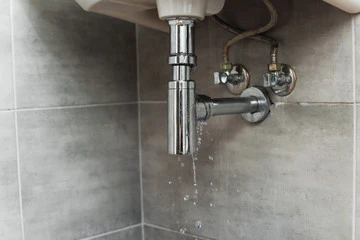
Where to look in your home covers four locations. Under kitchen and bathroom sinks where supply lines connect to shut-off valves. Near the water heater in the utility room or garage where supply connections enter the unit. In any unfinished utility space where pipe runs are visible. And where supply lines enter walls from the floor or ceiling.
What it is often confused with includes grey PVC which is rigid and used for drain lines not supply lines. CPVC which is cream or off-white and rigid. And early PEX which is also flexible but typically marked differently and appears in red for hot and blue for cold in modern installations.
How to confirm definitively is to look at the pipe surface itself. Polybutylene supply pipe manufactured for residential use is marked with the designation PB2110 stamped or printed along its length. If you find grey flexible plastic pipe and see PB2110 on the surface there is no ambiguity. That is polybutylene.
If your home was built between 1978 and 1995 and you see grey flexible plastic pipe in any accessible location it is almost certainly polybutylene. The combination of build year and visual identification is sufficient to warrant a professional assessment even before confirming the PB2110 marking.
How Polybutylene Fails — The Chemistry Behind the Problem
Polybutylene does not fail because it was installed incorrectly or because homeowners failed to maintain it. It fails because of a fundamental incompatibility between the material itself and the chlorinated municipal water that flows through it every day. Understanding that chemistry explains why replacement is the only permanent solution.
Chlorine and oxidants in municipal water attack the inner surface of polybutylene pipe continuously from the first day water flows through it. NTMWD and Dallas Water Utilities both treat water with chlorine and chloramines as required by federal drinking water standards. Those disinfectants are effective at keeping water safe to drink. They are also oxidizing agents that react with the polybutylene polymer at the molecular level every time treated water contacts the pipe interior.
The three stages of polybutylene degradation follow a consistent and documented progression. In the first stage the inner pipe surface begins to flake and pit as the polymer structure breaks down under oxidant exposure. The pipe looks completely normal from the outside during this stage. In the second stage micro-fractures develop through the pipe wall as the degradation advances from the interior surface outward. These fractures are invisible without cutting the pipe open. Water may begin seeping through at this stage without any surface evidence. In the third stage the fractures propagate fully through the pipe wall and a complete crack develops. Water escapes under supply pressure. By the time stage three occurs the water damage inside the wall has often been developing for days or weeks.
Why the exterior looks intact while the interior is compromised is the defining danger of polybutylene failure. Every other pipe material covered in our pipe materials guide provides external warning signs before catastrophic failure. Galvanized steel shows rust staining and pressure reduction. Copper shows green corrosion at fittings. Cast iron shows slow drainage. Polybutylene shows nothing on the outside until stage three is already complete and water is flowing inside a wall.
NTMWD and Dallas Water Utilities chlorination operates at levels required to meet EPA Safe Drinking Water Act standards. Those levels are appropriate for human health. They are also sufficient to drive polybutylene degradation at a rate that has produced failures across the DFW metro consistently since the 1990s. Homes in the NTMWD service area including Plano, Frisco, Wylie, Rowlett, and Mesquite and homes in the Dallas Water Utilities service area including Garland and Richardson are all receiving water that accelerates this process every day.
Degradation begins immediately upon contact with chlorinated water and compounds with every additional year of service. A polybutylene installation from 1985 has now had 40 years of continuous chlorine exposure. The degradation that began on day one has had four decades to advance through the pipe wall. The question for a DFW homeowner with 1985 polybutylene is not whether degradation has occurred. It is how far it has progressed.
What the Cox v. Shell Settlement Tells Us About Polybutylene
The most important documented evidence about polybutylene’s systemic failure rate is not a laboratory study or a plumber’s anecdotal experience. It is a federal class action lawsuit that was settled for over $950 million and whose conclusions remain relevant to every unrepaired polybutylene installation in the country today.
What the settlement was is straightforward. Cox v. Shell Oil Company was a national class action lawsuit brought on behalf of homeowners across the United States who had experienced polybutylene pipe failures. The defendants included Shell Oil Company which manufactured the polybutylene resin and several major fitting manufacturers. The plaintiffs argued that polybutylene was a defective product that failed at rates no reasonable homeowner could have anticipated when accepting it as part of a new home purchase.
When it was reached and what it paid establishes the scale of the acknowledgment. The settlement was reached in 1995 — the same year polybutylene was removed from the residential construction market. The settlement fund paid out over $950 million to affected homeowners. That figure represents one of the largest product defect settlements in the history of residential construction materials in the United States.
What it confirmed is the most important takeaway for a DFW homeowner today. The settlement did not conclude that some installations were defective due to poor workmanship. It concluded that the material itself was defective under normal residential use conditions. Every home with polybutylene installed according to standard practice during the 1978 to 1995 window received a defective product regardless of who installed it or how carefully the work was done.
Why the settlement matters today is a question worth answering directly because the settlement fund has been closed for decades. The fund is closed. The failure risk is not. Every polybutylene installation that was not replaced during the settlement window is still in service with the same material defect the settlement acknowledged. The degradation process documented in that litigation has continued for 30 additional years since the settlement was reached. A 1985 installation that was not replaced in 1995 is now a 1985 installation with 40 years of chlorine exposure and no remediation.
The Cox v. Shell settlement is not ancient history for a homeowner with unrepaired polybutylene in their walls. It is documented proof — established in federal litigation and acknowledged by the manufacturers themselves through a $950 million settlement — that proactive replacement is not overcautious. It is the correct response to a known material defect that compounds with every additional year of service.
Which DFW Cities and Neighborhoods Have the Highest Polybutylene Exposure
The DFW metro is more heavily affected by polybutylene exposure than most regions of the country for one specific reason. The years of peak polybutylene use — 1978 to 1995 — coincided almost exactly with the highest-volume residential construction period in the history of the suburban DFW market. Production builders were constructing thousands of homes per year across the metro during this window and polybutylene was the standard supply line material on virtually every job site.
Garland has the highest concentration of polybutylene exposure in our service area. The city’s largest residential growth period falls squarely in the 1978 to 1995 window. Neighborhoods along Buckingham Road, Shiloh Road, and the residential streets surrounding Naaman Forest High School on Holford Road represent large clusters of homes built during peak polybutylene years. Many of these homes have never been repiped. Our plumber in Garland TX page covers the specific plumbing challenges these homes face in more detail.
Rowlett built the majority of its housing stock between 1978 and 1995 with a median construction year of 1997 that masks how many homes in the city fall inside the polybutylene window. Liberty Grove, Dalrock Road neighborhoods near Rowlett High School, and the residential streets along Merritt Road all have meaningful concentrations of pre-1995 construction. Our plumber in Rowlett TX page addresses the specific conditions in these neighborhoods.
Richardson homes near Canyon Creek, Arapaho Estates, and the residential corridors along Belt Line Road include significant housing stock from the late 1970s and 1980s that falls inside the polybutylene installation window.
Mesquite neighborhoods along Gus Thomasson Road and the older residential sections near Buckner Boulevard include pre-1995 homes where polybutylene was commonly installed during the city’s growth years.
Older Plano neighborhoods near Spring Creek Parkway and the pre-1990 residential areas of west Plano have polybutylene exposure that newer Plano development east of the tollway does not share.
Cross-referencing your city and construction year is the starting point for assessing your risk level. If your home is in any of the cities above and was built between 1978 and 1995 the probability of polybutylene being present is significant.
One critical point that homeowners frequently overlook is that cosmetic renovation does not replace supply lines. A kitchen remodel that updated cabinets, countertops, and fixtures in 1998 did not repipe the walls behind those cabinets. A bathroom renovation that replaced tile and fixtures did not address the supply lines running to those fixtures. A home that looks completely updated on the surface may have its original 1984 polybutylene supply lines running through every wall untouched.
Does Polybutylene Always Fail
The honest answer is that not every polybutylene installation has failed yet. Some homes built in 1985 still have their original polybutylene supply lines running without a documented leak. That fact is real and worth acknowledging. It is also the least reassuring thing about polybutylene’s failure pattern.
Degradation is progressive and invisible. A polybutylene installation that has not produced a visible leak has not been confirmed as intact. It has simply not reached stage three of the degradation process yet. The internal flaking and micro-fracturing that precede a full pipe failure are occurring whether or not water has appeared inside a wall. The absence of a leak is not evidence that the pipe is in good condition. It is evidence that stage three has not arrived yet.
The age factor makes the current situation more urgent than it has ever been. Polybutylene installed in 1985 is now 40 years old. The documented failure window for this material — the period during which failures most commonly occur — runs from 10 to 25 years of service in chlorinated water conditions. A 1985 installation is now 15 years past the outer boundary of that documented window. Every additional year of service is additional time past a failure threshold the material was never designed to exceed.
The hard water factor accelerates the timeline for DFW homes specifically. NTMWD and Dallas Water Utilities both chlorinate water at levels required by federal drinking water standards. Those chlorination levels are consistent with or above what was present in regions where the Cox v. Shell settlement claims originated. A DFW home’s polybutylene has been exposed to continuous chlorination at a level the Cox v. Shell litigation documented as sufficient to drive systemic material degradation. The hard water context our hard water guide covers adds oxidant load to pipe walls that low-hardness water regions do not experience at the same level.
What insurance companies have concluded is the most practical signal available. Many homeowners insurance carriers in Texas now exclude polybutylene pipe failures from coverage entirely or charge significantly higher premiums for homes with known polybutylene supply lines. Some carriers require documented repiping before issuing or renewing a policy on a pre-1995 home. An insurer’s underwriting decision is a financial assessment of risk probability — and the industry assessment of polybutylene risk is that it is high enough to price accordingly or exclude entirely.
The question for a DFW homeowner with unrepaired polybutylene is not whether the pipes will eventually fail. The degradation process documented in federal litigation, observed across millions of homes, and priced into insurance underwriting decisions is not reversible and does not stop. The question is whether the failure happens before or after you replace the pipes on your own terms with a written estimate and a planned timeline.
Should You Replace Polybutylene Pipes in Your DFW Home
The replacement decision comes down to three factors — what you know about your pipes, what your insurance situation requires, and what the cost comparison between proactive and emergency replacement actually looks like.The case for proactive replacement is built on three documented realities. Polybutylene fails silently. Hidden water damage from an undetected pipe failure inside a wall accumulates for days or weeks before any surface sign appears. Remediation and repair costs after a failure — including water extraction, drywall replacement, mold assessment, and repiping — consistently run significantly higher than the cost of planned repiping before any failure occurs. And many Texas insurance carriers now exclude polybutylene failures from coverage or require repiping before issuing a policy. A homeowner who waits for a failure may face the full remediation cost without insurance coverage precisely because their insurer already knew this risk was coming.
The case for inspection first is reasonable for homeowners who are not certain polybutylene is present or who want to understand the current condition of their system before committing to a full repipe. A licensed plumber can confirm whether polybutylene is present through visual inspection of accessible pipe runs and can assess visible fittings and connections for signs of advanced degradation. Inspection does not tell you what is happening inside the walls but it confirms presence and identifies any connections already showing external stress. If polybutylene is confirmed an inspection gives you the information needed to make a replacement decision on your own timeline rather than under emergency pressure.
What whole-home repiping involves is a planned replacement of all polybutylene supply lines with PEX-A. A licensed plumber accesses pipe runs through walls, ceilings, and floors, removes the existing polybutylene, and installs new PEX-A supply lines to every fixture in the home. Drywall access points are made and patched. The work is typically completed in one to three days depending on home size. Water service is interrupted only during the active installation phase. Most homeowners find the disruption manageable with advance planning.
Cost for whole-home repiping in DFW runs between $4,500 and $9,000 for most residential properties depending on home size, number of fixtures, and accessibility of existing pipe runs. A standard three bedroom home typically falls in the $4,500 to $6,500 range. Larger homes with more complex layouts run toward the upper end. That cost compares to emergency repiping after a hidden failure which adds water extraction, drywall remediation, mold assessment, and temporary accommodation costs to the same base repiping price — often doubling or tripling the total expense. Use our plumbing cost estimator to get a realistic range for your specific home size and location before calling anyone.
What to Do Right Now If You Think You Have Polybutylene
This is a five-step process that any DFW homeowner can start today without calling anyone first.
Step 1 — Identify your home’s construction year.
Check your property tax record at your county appraisal district website. Dallas County, Collin County, Rockwall County, and Kaufman County all publish construction year data online at no cost. If your home was built between 1978 and 1995 proceed to step two.
Step 2 — Look for visible grey flexible plastic pipe in accessible areas
Check under every kitchen and bathroom sink where supply lines connect to shut-off valves. Check near the water heater in your garage or utility room. Look in any unfinished utility space where pipe runs are exposed. You are looking for grey or blue-grey flexible plastic pipe that bends without tools.
Step 3 — Check the pipe surface for the PB2110 marking
Look along the length of any grey flexible plastic pipe you find for the designation PB2110 stamped or printed on the surface. This marking confirms polybutylene definitively. If you find it you have your answer.
Step 4 — Call a licensed plumber for a professional assessment if uncertain
If you cannot access enough pipe to make a confident identification or if you find grey plastic pipe without a visible marking a licensed plumber can confirm the material through a more thorough inspection of accessible pipe runs and fittings. Our water leak repair service includes polybutylene identification as part of any leak-related inspection. Use our free plumbing diagnostic tool to document what you are seeing before you call so we arrive prepared.
Step 5 — Get a written estimate for repiping if polybutylene is confirmed
A written flat-rate estimate before any commitment is made gives you a clear picture of the cost, the timeline, and the scope of work. There is no obligation attached to an estimate. What it gives you is the information needed to make a planned decision rather than an emergency one.
For a DFW homeowner in a pre-1995 home polybutylene supply lines represent the single highest-probability plumbing risk in the house — a material defect acknowledged in federal litigation, documented across millions of homes, and now 30 to 47 years into a service life it was never designed to complete. A professional assessment by a licensed plumber replaces uncertainty with facts and gives you the information needed to act on your own terms before the material acts on its own timeline.