
How to Protect Your North Texas Home’s Plumbing From a Freeze — A Practical Guide for DFW Homeowners
Winter Storm Uri in February 2021 caused over $20 billion in statewide property losses according to the Insurance Council of Texas — with burst pipes accounting for a significant share of that damage across the DFW metro. The reason North Texas homes suffered at that scale is not that the freeze was unusually severe by national standards. It is that DFW homes were built for a climate where sustained temperatures below 20 degrees Fahrenheit are rare — leaving pipe runs in garages, attics, and exterior walls with no insulation protection against the conditions that freeze them. This guide addresses those specific vulnerabilities directly.
Why DFW Homes Are More Vulnerable to Frozen Pipes Than Homes in Colder States
A home built in Minnesota has pipe insulation, heated crawl spaces, and construction details designed around the assumption that temperatures will drop well below freezing every winter for months at a time. A home built in DFW has none of those features — because until Uri, a sustained freeze below 20 degrees Fahrenheit was a once-in-a-generation event that builders had no financial incentive to design around.
North Texas building codes have historically required significantly less pipe insulation than codes in colder climate zones. Pipe runs that would be fully insulated and located in heated interior spaces in a northern state home are commonly run through unheated garages, unconditioned attic spaces, and exterior wall cavities with minimal insulation in a DFW home. Those locations are where the overwhelming majority of North Texas freeze failures occur.
Builder-grade construction during DFW’s growth waves compounded the vulnerability. Homes built rapidly during the 1990s and 2000s growth surges in Frisco, McKinney, and Forney were constructed to code minimum standards for a temperate climate. Pipe runs took the most direct route rather than the most protected one. Attic water lines — installed for convenience during construction — are among the most freeze-vulnerable pipe locations in the DFW metro because attic temperatures during a sustained freeze drop well below the 20-degree failure threshold.
Older pipe materials increase freeze vulnerability beyond what modern PEX-A supply lines face. Polybutylene pipe already weakened by chlorine degradation cracks under freeze stress at pressures that intact PEX-A handles without failure. Galvanized steel supply lines with internal corrosion narrowing have less wall thickness to resist the expansion pressure of freezing water. Both materials are overrepresented in the pre-1995 DFW housing stock that produced the highest failure rates during Uri.
The temperature threshold for pipe freezing is sustained exposure below 20 degrees Fahrenheit — not a brief dip. A pipe in an unheated garage can reach ambient outdoor temperature within hours of a freeze beginning. At 20 degrees the water inside begins to freeze. At 0 degrees the expansion pressure inside the pipe exceeds what most residential supply pipe materials can contain without cracking.
The Three Phases of Freeze Protection — Before, During and After
Freeze pipe damage in DFW homes follows a consistent pattern — most of it happens to homeowners who were in Phase 2 or Phase 3 without having completed Phase 1. The three-phase framework below organizes every protective action into the sequence that produces the best outcome. Phase 1 is where freeze damage is prevented. Phase 2 is where it is minimized. Phase 3 is where it is caught before it becomes catastrophic.
Phase 1 — Before the Freeze
Preparation steps taken before a freeze warning is issued or immediately after one is announced. This is the phase with the highest protective return per action taken. Insulation, shutoff valve location, irrigation drainage, and cabinet preparation all happen here. A homeowner who completes Phase 1 correctly reduces their freeze risk by the largest margin of any single phase.
Phase 2 — During the Freeze
Actions taken during an active sustained freeze event — when temperatures are at or below 20 degrees Fahrenheit. Dripping faucets, open cabinet doors, maintained indoor heat, and knowing the signs of a frozen pipe all belong here. Phase 2 addresses what Phase 1 preparation missed or could not fully protect against.
Phase 3 — After the Freeze
Inspection and response steps taken after temperatures rise above freezing. This phase catches pipes that were stressed by the freeze but have not yet failed completely — a window that can last 24 to 72 hours after thaw begins as internal ice melts and pressure returns to stressed pipe walls. Skipping Phase 3 is how a manageable freeze-stressed pipe becomes a burst pipe that floods a room.
Most freeze damage in DFW homes is preventable at Phase 1. The sections below cover each phase with the specific actions that matter most for North Texas homes and their specific construction vulnerabilities.
Phase 1 — Before the Freeze — What to Do When a Warning Is Issued
Phase 1 actions taken before a freeze warning becomes a freeze event are the highest-return protective steps available to a DFW homeowner. Every item below costs less than one burst pipe repair.
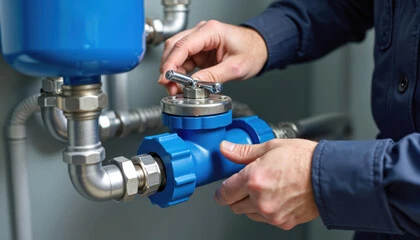
Locate your main water shutoff valve before a freeze warning is issued — not during one. In most DFW homes it is located where the main supply line enters the home near the foundation, in the garage, or at the street meter box. Know exactly where it is and confirm it operates fully. A shutoff valve that has not been operated in years may be stuck or partially seized — test it before you need it at 2am during a freeze event.
Disconnect and drain all outdoor hoses from hose bibs before temperatures drop. A connected garden hose traps water at the hose bib valve body and prevents it from draining — turning a frost-free hose bib into a standard freeze-vulnerable one. Drain and store hoses before the first freeze warning of the season.
Drain and winterize irrigation systems before sustained cold arrives. The backflow preventer on most DFW irrigation systems is mounted above ground and exposed to ambient air temperature — it is one of the most commonly freeze-damaged components in North Texas residential plumbing. Drain the system, shut the isolation valve, and insulate the backflow preventer with a commercial cover before a freeze warning.
Insulate exposed pipe runs in the garage, attic, and any exterior wall location where supply lines are accessible. Foam pipe insulation sleeves are available at any hardware store and install without tools. A garage supply line wrapped in foam insulation before a freeze is a supply line that does not freeze. An uninsulated one in a garage that reaches 15 degrees Fahrenheit is a supply line that almost certainly does.
Close crawl space vents before a freeze event if your DFW home has a crawl space. Crawl space vents that remain open during a freeze allow ambient cold air to circulate directly around supply and drain lines running beneath the floor. Most crawl space vents have a manual close mechanism — locate and operate them before temperatures drop.
Have a licensed plumber assess known vulnerable pipe runs before winter if your home has supply lines in the attic, uninsulated garage runs, or exterior wall pipe locations that have caused problems in previous freezes. A one-time assessment identifies the highest-risk locations and provides permanent insulation or relocation options before the next freeze warning arrives.
Homes with polybutylene or galvanized steel supply lines face the highest freeze failure risk in the DFW metro and should be the highest priority for pre-freeze professional assessment. Polybutylene already weakened by chlorine degradation and galvanized steel with internal corrosion both have reduced wall integrity that makes them more susceptible to freeze failure at lower pressure thresholds than intact modern pipe materials. Our polybutylene pipes guide covers the full risk profile for these materials.
Phase 2 — During a Freeze Event — What to Do When Temperatures Drop Below 20 Degrees
When sustained temperatures drop below 20 degrees Fahrenheit in North Texas the freeze event is active and Phase 1 preparation determines how much Phase 2 action is required. These steps minimize damage from what Phase 1 could not fully protect.
Let cold water drip from faucets on exterior walls. Moving water requires significantly lower temperatures to freeze than standing water. A slow drip — not a full stream — from the faucet furthest from the main shutoff on each exterior wall maintains flow through the most vulnerable supply line sections. Focus on kitchen faucets on exterior walls, bathroom faucets in rooms adjacent to exterior walls, and any fixture fed by a pipe run through an unheated garage or attic.
Keep cabinet doors under sinks open on exterior walls throughout the freeze event. Heated interior air circulates to the supply lines under the sink — lines that would otherwise be separated from the home’s heat by a cabinet door. This simple step costs nothing and meaningfully raises the temperature of the most exposed under-sink supply connections.
Maintain indoor temperature at 55 degrees minimum even when the home is unoccupied. A thermostat set to 55 degrees keeps interior wall cavities, under-sink spaces, and garage-adjacent rooms warm enough to protect most interior pipe runs. Turning the heat off entirely during a freeze to save on energy costs is the single most common decision that produces burst pipes in vacant DFW homes during winter events.
Do not leave town during an active freeze warning without arranging for someone to check the property daily. If travel cannot be avoided turn the water off at the main shutoff before leaving and drain the system by opening the lowest fixture in the home. A drained supply system cannot burst regardless of how cold temperatures drop.
Know the signs that a pipe has already frozen. No water flow at a specific fixture when other fixtures work normally indicates a frozen pipe in that fixture’s supply line. Reduced flow at multiple fixtures simultaneously indicates a frozen section on the main supply line. Frost visible on an exposed pipe in the garage or attic confirms the freeze location.
What to do if a pipe has frozen but not yet burst is apply gentle heat to the frozen section — a hair dryer on low heat, warm towels, or a portable electric space heater directed at the pipe from a safe distance. Start warming at the fixture end of the frozen section and work back toward the supply source. Never apply heat directly to a plastic pipe including PEX or polybutylene — direct heat damages the pipe material.
What never to do is apply an open flame heat source — a propane torch, a lighter, a candle — to any frozen pipe under any circumstances. Open flame on a frozen pipe creates fire risk and can cause the pipe to fail explosively when the frozen section thaws unevenly under direct heat.
Phase 3 — After the Freeze — What to Check Before Assuming Everything Is Fine
The freeze is over. Temperatures have risen. No visible water damage has appeared. Many DFW homeowners stop there — and discover a burst pipe 24 to 48 hours later when the ice blockage that was containing the failure melts completely and pressure returns to a cracked pipe wall.
Why post-freeze inspection matters is the physics of how frozen pipe failures develop. When water freezes inside a pipe it expands and stresses the pipe wall — but the ice blockage itself can temporarily contain the leak by plugging the crack from inside. As temperatures rise and the ice melts that plug disappears. Water under full supply pressure now flows through a crack that the ice was masking. The failure that was invisible during the freeze becomes visible — often catastrophically — during the thaw.
Where to check first in a DFW home after a freeze follows the same priority order as Phase 1 preparation. Start in the garage — check every visible supply line for frost, moisture, or discoloration at connection points. Move to any accessible attic space where water lines are present — look for frost on pipe surfaces and moisture on the attic floor below pipe runs. Check under every sink on exterior walls for moisture or dripping at supply connections. Inspect outdoor hose bibs for frost or moisture around the valve body.
How to read your water meter for active loss is the most reliable post-freeze check available without a plumber. Locate the meter at the street. Write down the reading. Do not use any water in the home for 30 minutes. Check the meter again. If the reading has changed with no fixture in use water is actively leaving your supply system through a crack somewhere in the home. Call a licensed plumber before turning any additional fixtures on.
Signs a pipe was damaged but has not yet failed completely include discoloration or staining around a supply line connection that was not there before the freeze, a slight reduction in pressure at fixtures that was not present before, moisture on the exterior of a pipe that should be dry, and any visible deformation or bulging at a pipe connection or fitting.
When to call a licensed plumber is before turning everything back on if you have any doubt about the condition of your pipe runs following a sustained freeze. A post-freeze inspection by a licensed plumber — pressure testing the supply system and visually inspecting all accessible pipe runs — identifies stressed pipe before it fails rather than after. If a pipe has already failed read our burst pipe guide for the exact steps to take from the first 60 seconds.
The Highest-Risk Pipe Locations in a DFW Home
Freeze failures in DFW homes concentrate at predictable locations. Knowing which locations carry the highest risk tells you exactly where to focus Phase 1 preparation and Phase 3 inspection.
Garage supply lines are the most common freeze failure location in the DFW metro. An attached garage in a North Texas home is typically unheated and uninsulated. During a sustained freeze the garage interior temperature tracks close to ambient outdoor temperature. Supply lines running through or along garage walls — to a water heater, washing machine connection, or utility sink — are fully exposed to those temperatures with no thermal protection between them and the freezing air surrounding them.
Attic pipe runs are the second most common failure location and the most dangerous because attic failures often go undetected until significant water damage has occurred in the ceiling below. Water lines routed through attic spaces — common in homes built during the fast-growth construction waves in Frisco, McKinney, and Forney during the 1990s and 2000s — are exposed to attic temperatures that drop faster and lower than interior wall temperatures during a freeze. An attic at 5 degrees Fahrenheit with an uninsulated supply line is a burst pipe waiting to occur.
Exterior wall supply lines in homes built before 1985 without adequate wall insulation are the third highest-risk location. Pre-1985 DFW construction used wall insulation levels that met code at the time but provide minimal thermal protection against sustained temperatures below 20 degrees. Supply lines running through these walls — particularly on north and northwest-facing exterior walls that receive the least solar warming — freeze faster than interior wall supply lines in the same home.
Outdoor hose bibs fail at the valve body during freeze events when a garden hose left connected prevents the internal drain mechanism from functioning. A frost-free hose bib drains the water from the exposed valve body automatically when the tap is turned off — but only if no hose is connected. A connected hose blocks that drainage and the valve body freezes and cracks at the most exposed point on the home’s exterior plumbing.
Irrigation system backflow preventers are mounted above ground on most DFW residential irrigation systems — typically on the exterior wall near the water meter. The backflow preventer body is fully exposed to ambient air temperature with no insulation. It is one of the least expensive components in the irrigation system and one of the most consistently freeze-damaged across the DFW metro.
Pool equipment supply lines at pump pads in premium McKinney, Frisco, and Rockwall properties are exposed above ground and frequently overlooked in freeze preparation. Pool equipment shut-off and winterization before a freeze prevents the pump body and supply connections from failing — a repair that runs $500 to $2,000 depending on what cracks.
Quick Summary — Highest-Risk Pipe Locations in DFW
- Pool equipment supply lines — McKinney Frisco and Rockwall premium properties
- Garage supply lines — unheated uninsulated most common failure location
- Attic pipe runs — fast-growth era homes in Frisco McKinney and Forney
- Exterior wall supply lines — pre-1985 construction with minimal wall insulation
- Outdoor hose bibs — connected hoses block frost-free drain mechanism
- Irrigation backflow preventers — exposed above ground on most DFW properties
Permanent Freeze Protection Improvements for DFW Homes
Every freeze preparation step in Phase 1 and Phase 2 is something a DFW homeowner has to repeat before every freeze warning. Permanent improvements eliminate that repetition and provide protection regardless of whether a freeze warning arrives with enough notice to act.
Pipe insulation on all exposed garage and attic runs is the highest-return permanent freeze protection investment for most DFW homes. Professional installation of foam or fiberglass pipe insulation on every exposed supply line in the garage and attic — surfaces that reach freezing temperatures during sustained freeze events — is a one-time cost that eliminates the highest-risk failure locations permanently. A licensed plumber identifies every exposed run, selects the appropriate insulation thickness for each location, and installs it correctly around fittings and valves where DIY insulation commonly leaves gaps.
Frost-free hose bibs replace standard hose bibs with a valve design that locates the actual shutoff point 6 to 12 inches inside the wall rather than at the exterior face. When the tap is closed the water drains from the exposed exterior section automatically — eliminating the freeze failure mechanism at every hose connection point on the home. Frost-free hose bib replacement costs $150 to $300 per bib installed and lasts the life of the home under normal use.
Insulated irrigation backflow preventer covers are commercial foam or rigid insulated covers that enclose the exposed backflow preventer assembly on the exterior wall. They cost $15 to $40 per unit and install in minutes. A covered backflow preventer survives most DFW freeze events without damage. An uncovered one fails at sustained temperatures below 20 degrees with a repair cost of $200 to $600 to replace the damaged assembly.
Heat tape on chronic freeze-risk pipe runs provides active temperature-maintained protection on pipe runs where insulation alone is insufficient — typically attic runs in homes where rerouting is not practical or garage runs in unheated spaces that reach extreme low temperatures during sustained freezes. Thermostatically controlled heat tape activates automatically when pipe surface temperature drops below a set threshold and maintains the pipe above freezing without continuous power consumption. Installation cost runs $200 to $500 depending on run length and access.
Whole-home pipe insulation assessment by a licensed plumber before winter identifies every vulnerable run in a single visit and produces a written scope of work covering all recommended permanent improvements. The assessment gives a homeowner a complete picture of freeze risk across the entire property — not just the locations that failed in the last freeze — and a prioritized improvement plan with costs before any work begins.
Total cost for permanent freeze protection improvements runs $200 to $1,500 for most DFW homes depending on the number of exposed runs, hose bibs requiring replacement, and whether heat tape is warranted. A single burst pipe repair in DFW runs $400 to $1,500 per break — not including water damage remediation. One freeze season without a failure pays for most permanent improvement scopes entirely.
What Winter Storm Uri Taught DFW Homeowners About Freeze Vulnerability
Winter Storm Uri in February 2021 was not a plumbing failure event. It was a construction standards revelation — a sustained freeze that exposed exactly where DFW homes were built without adequate protection and which pipe materials could not survive conditions that northern state homes handle routinely every winter.
The scale of damage documented by the Insurance Council of Texas — over $20 billion in statewide property losses — reflected how broadly the vulnerability was distributed across the DFW housing stock. It was not concentrated in a few poorly maintained older homes. It was distributed across homes of multiple ages, construction types, and price points because the underlying vulnerability — uninsulated pipe runs in unheated spaces — was present across all of them.
What pipe materials failed most commonly during Uri followed the risk hierarchy covered throughout this article. Polybutylene supply lines already weakened by decades of chlorine degradation cracked under freeze pressure at lower stress thresholds than intact modern pipe. Galvanized steel supply lines with internal corrosion had reduced wall thickness that could not contain the expansion pressure of freezing water. Uninsulated copper supply lines in attic spaces — common in 1980s and 1990s DFW construction — failed at the fittings and solder joints where thermal stress concentrates during rapid temperature change. PEX-A in well-insulated locations performed significantly better than all three older materials in comparable exposure conditions.
What the failure pattern revealed about DFW home construction is that the vulnerability is structural not circumstantial. Attic water lines, uninsulated garage supply runs, and exposed hose bibs are not maintenance failures — they are design features of homes built for a climate where sustained temperatures below 20 degrees were not anticipated as a planning assumption. Uri did not create vulnerable homes. It revealed homes that were already vulnerable.
What has changed since Uri in DFW home construction is incremental rather than transformational. Some builders have adjusted attic pipe routing away from the most exposed locations. Some municipalities have updated code guidance on pipe insulation in unheated spaces. Insurance carriers have become more specific about freeze coverage terms and exclusions. What has not changed is the existing housing stock — the hundreds of thousands of pre-2021 DFW homes with the same pipe runs, the same garage supply lines, and the same uninsulated attic routes that failed during Uri remain in exactly the same condition.
Homes built before 2000 remain the highest freeze risk in the DFW metro regardless of how much awareness Uri generated. The construction decisions that created those vulnerabilities were made at the time of building and have not been retrofitted in most cases. Our polybutylene pipes guide covers the specific freeze vulnerability profile of pre-1995 DFW homes where polybutylene supply lines add a second failure mechanism to the existing insulation deficiency.
What Freeze-Related Plumbing Repairs Cost in DFW
Burst Pipe Repair — $400 to $1,500 Per Break
Cost varies by pipe location and access. A garage supply line break with direct visual access runs toward the lower end. An attic supply line break requiring ceiling access or attic work runs toward the upper end. Multiple breaks at separate locations are quoted individually — a home with three freeze failures in different locations faces three separate repair costs plus remediation for each.
Water Damage Remediation — $2,000 to $15,000
The remediation cost range reflects how long the pipe ran before the failure was discovered. A burst pipe found within hours of failure produces minimal remediation cost. A burst pipe in an attic that ran overnight or through a weekend produces saturated insulation, damaged drywall, warped flooring, and potential mold conditions that drive remediation cost toward the upper end of the range. The thaw-delay failure window covered in Phase 3 — where a stressed pipe fails 24 to 72 hours after temperatures rise — is the scenario that most commonly produces the higher remediation costs.
Pipe Insulation Installation — $200 to $800
Professional installation of foam or fiberglass pipe insulation on targeted exposed runs in the garage and attic. Cost reflects run length, fitting complexity, and access conditions. This is the permanent improvement that eliminates the failure risk at the highest-risk locations — for less than the minimum burst pipe repair cost at a single location.
Full Post-Freeze Repipe — $4,500 to $9,000
When a freeze event produces multiple failures throughout a home’s supply system — common in pre-1995 homes with polybutylene or galvanized steel supply lines — whole-home repiping with PEX-A is more cost-effective than individual break repairs across multiple locations. A post-freeze repipe addresses all existing damage and eliminates the material vulnerability that caused the failures simultaneously.
Insurance Coverage for Freeze Damage
Most Texas homeowner insurance policies cover sudden and accidental burst pipe damage from a freeze event — including the water damage to walls, ceilings, and flooring. Coverage typically excludes the pipe repair itself, gradual leaks that predate the freeze, and damage resulting from failure to maintain adequate heat in the home. Document all damage with photographs before any cleanup or repair begins and contact your insurer before authorizing repair work to confirm coverage scope.
Use our plumbing cost estimator to get a realistic repair cost range for your specific home, pipe material, and DFW city before calling anyone.
Freeze pipe damage in DFW homes is predictable — concentrated at known locations, in known pipe materials, during conditions that a forecast identifies days in advance. A licensed plumber pre-freeze assessment identifies every vulnerable run in your specific home, provides permanent improvement options with written costs, and eliminates the highest-risk failure locations before the next freeze warning arrives rather than after it has already produced a burst pipe and a remediation bill.