What to Do When a Pipe Bursts in Your DFW Home — Step by Step From the First 60 Seconds
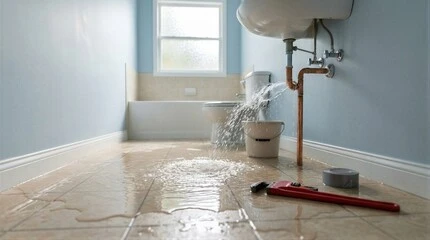
If a pipe has just burst in your home go to your main water shutoff valve and turn it off right now — before reading anything else on this page. Every minute the water runs adds damage that costs more to remediate than the pipe repair itself.
Step 1 — Shut Off the Water Immediately
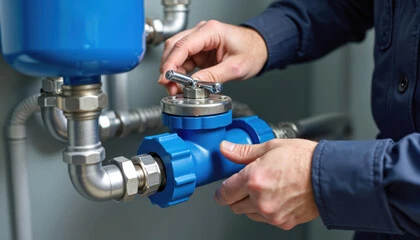
Turn the main shutoff valve clockwise until it stops. Do not turn it partway. Close it completely.
Where the main shutoff valve is located in a DFW home is one of three places. The most common location is inside the garage where the main supply line enters the home through the foundation — typically near the water heater or along the wall closest to the street. The second location is in a utility closet or mechanical room near where the supply line enters the structure. The third location is at the street meter box — a covered box near the curb that requires a meter key or adjustable wrench to operate. Know which applies to your home before you need it.
How to operate it is the same regardless of valve type. Turn clockwise to close. Ball valves — the quarter-turn lever style common in newer DFW homes — close with a single 90-degree turn of the handle until the lever is perpendicular to the pipe. Gate valves — the round wheel style common in older homes — require multiple full clockwise turns until resistance stops.
If the main shutoff valve is seized or will not close go to the street meter box and shut off at the meter. If the meter shutoff also fails call your water utility — NTMWD or Dallas Water Utilities depending on your city — and report an emergency shutoff request. Most utilities respond to active leak emergencies within 30 to 60 minutes.
Individual fixture shutoff valves under sinks and behind toilets can isolate a specific failure point if the burst pipe is at or near a single fixture and the main shutoff is inaccessible. Turn the small oval handle clockwise until it stops. These valves control only the fixture they serve — they do not stop water flow to the rest of the home.
Every second the water runs after a pipe bursts adds damage that costs more to remediate than the repair itself. Shutting off the water is the only priority in the first 60 seconds. Everything else comes after.
Step 2 — Turn Off the Electricity in Affected Areas
Go to your breaker panel and turn off the circuits serving the rooms with water damage. If you are not certain which circuits serve the affected area turn off the main breaker. Do not enter standing water in any room before the power to that area is confirmed off.
Why electricity and water create electrocution risk is straightforward. Water conducts electricity. A flooded room with an active electrical circuit — a plugged-in appliance, a wall outlet at floor level, a ceiling fixture with water pooling above it — is a lethal environment. The risk is not visible. Water that looks safe to walk through can carry a lethal current from an energized outlet or appliance contact point.
How to identify which circuits serve the affected area requires your breaker panel directory — the label inside the panel door that maps circuit numbers to rooms or zones. Most DFW homes have labeled panels. Find the circuits corresponding to the affected rooms and switch them off individually. If the panel directory is missing, unlabeled, or unclear do not guess. Turn off the main breaker.
When to turn off the main breaker rather than individual circuits covers three situations. When the panel directory is missing or illegible. When the affected area is large enough that multiple unlabeled circuits may be involved. And when water is visibly present near the breaker panel itself — in which case do not approach the panel and leave the property immediately.
When to leave the property entirely and call emergency services rather than attempting to manage the situation yourself is when water is present near the electrical panel, when you smell burning or see sparking near water-affected electrical components, or when the volume of water entering the home is beyond what shutting off the main valve has contained. Call 911 and do not reenter until emergency services confirm the property is safe.
Do not enter standing water in a room with active electrical fixtures under any circumstances. The burst pipe repair cost is recoverable. Electrocution is not.
Step 3 — Document Everything Before Cleanup Begins
Before moving a single item or absorbing a drop of water take out your phone and start recording. Documentation before cleanup is not optional for a Texas homeowner insurance claim — it is the evidence your adjuster requires to approve payment.
Why documentation before cleanup is required comes down to how insurance claims are evaluated. An adjuster who arrives after cleanup has no way to verify the extent of damage that existed at the time of the failure. A claim supported only by post-cleanup photographs is a claim that can be disputed, reduced, or denied on the basis that the damage cannot be independently confirmed. Pre-cleanup documentation is the record that prevents that dispute.
What to photograph covers four categories. The water source — the visible pipe failure location, the water entry point, and any visible crack or break in the pipe itself. Visible damage — wet walls, saturated flooring, damaged ceilings, waterlogged insulation, affected furniture and personal property. Affected surfaces — close-up photographs of every surface showing water contact including baseboards, drywall, cabinetry, and flooring materials. Standing water — photographs showing water depth and spread across the affected area before any removal begins.
Video documentation is more valuable than photographs alone because it captures the full scope of damage in a continuous record that is harder to dispute than individual still images. Walk through every affected room recording continuously. Narrate what you are seeing — the location, the visible damage, the water source — while recording. A two-minute video walkthrough provides more evidentiary support than twenty individual photographs.
Note the exact time the failure was discovered. Write it down. The time of discovery is a required field on most insurance claim forms and establishes the timeline your adjuster uses to assess response reasonableness.
Cleanup before documentation can void a claim or significantly reduce the payment. Complete the full documentation step before touching anything.
Step 4 — Begin Water Removal and Damage Limitation
Water removal starts the moment documentation is complete. Every minute standing water remains in contact with flooring, drywall, and framing increases remediation cost and accelerates mold conditions in DFW’s humidity levels.
Open doors and windows if outdoor temperature allows air circulation. Moving air accelerates surface drying and reduces the humidity that supports mold growth. Do not open windows during a freeze event — the temperature benefit of ventilation is outweighed by the freeze risk to additional pipe runs in a home that may already have compromised insulation.
Use towels, mops, and buckets to remove standing water from hard surface floors. Work from the edges of the wet area toward the drain or lowest point to avoid spreading the water further. Saturated carpet should be pulled back from tack strips and the padding beneath it removed — carpet padding retains water and produces mold conditions within 24 hours in a DFW home.
Move valuables, furniture, and electronics away from the affected area immediately. Place aluminum foil or plastic sheeting under furniture legs that must remain in the area — wood furniture legs in contact with wet flooring transfer moisture into the wood and produce staining that spreads beyond the original wet zone.
Do not use a standard household vacuum on standing water. A standard vacuum is not designed for liquid extraction and using one on standing water creates electrocution risk from the motor and water contact. A wet-dry shop vacuum is appropriate for standing water removal on hard surfaces.
Place towels at doorways to prevent water migration into adjacent rooms. Water follows the path of least resistance across hard floors — a towel barrier at the doorway of an affected room buys time to remove standing water before it spreads to flooring in rooms the burst pipe did not directly affect.
When to call a water damage remediation company versus managing removal yourself depends on water volume and surface penetration. A contained failure affecting a small area of hard surface flooring that is caught within the first hour is manageable with household tools. A failure that has saturated carpet, penetrated subfloor, reached wall cavities, or affected multiple rooms requires professional water extraction equipment and moisture metering to confirm complete drying — conditions that standard household tools cannot address adequately. Remediation companies in DFW typically respond within two to four hours of an emergency call.
Step 5 — Call a Licensed Plumber for Emergency Repair
Call a licensed plumber as soon as documentation is complete and initial water removal is underway. Do not wait until the full extent of damage is clear — the pipe needs to be repaired before water service can be restored to the home.
Why emergency repair before full assessment wastes money is a practical distinction that saves DFW homeowners from a common mistake. A plumber called for an emergency burst pipe repair addresses the break. A plumber called for an emergency burst pipe repair who also performs a pressure test and visual inspection of the surrounding pipe system identifies whether the burst was an isolated failure or a symptom of a broader pipe condition — polybutylene degradation, freeze-stressed pipe runs, or hard water thinned copper — that will produce the next failure within weeks. Paying for the assessment alongside the repair costs less than paying for a second emergency call a month later.
What a licensed plumber does on an emergency burst pipe call follows a consistent sequence. Confirm the water supply is off at the main shutoff. Locate and visually assess the failure point. Identify the pipe material and determine whether the break is isolated or part of a pattern. Provide a written estimate for the repair before touching the pipe. Complete the repair. Pressure test the system before restoring water supply to confirm no additional failures exist in the line.
What to tell the plumber when you call gives them the information needed to arrive with the right materials and equipment. The location of the break — which room, which wall, which fixture it is near. The visible pipe material — copper grey plastic white plastic galvanized metal. Whether the water is fully off or still running. Whether ceiling damage or wall cavity penetration is visible. A plumber who arrives with this information arrives prepared rather than requiring a second trip for materials.
What to expect on timing for a licensed DFW plumber responding to a burst pipe emergency is same-day service in most cases. Buckner Blvd Plumbing Co Inc answers emergency calls around the clock. A licensed plumber — not a dispatcher — answers directly and gives you a realistic arrival time before the call ends.
A written estimate before repair is still required even in an emergency. The urgency of the situation does not change the standard. A flat-rate written price before work begins protects against inflated emergency pricing and gives you a number to provide your insurance adjuster when documenting repair costs. Our water leak repair service provides written estimates on every job including emergency calls.
Step 6 — Contact Your Insurance Company
Call your insurance company the same day the failure occurs. Do not wait until the plumber has completed the repair or until you have a full damage assessment. Same-day notification is a policy requirement for most Texas homeowner policies — delayed notification can complicate or reduce the claim regardless of how well documented the damage is.
What information to have ready when you call covers five items. Your policy number — locate it on your declarations page or insurance app before you call. The time of discovery — the exact time you noted when the failure was found. Your documentation — confirm to the adjuster that photographs and video were taken before cleanup began. The plumber’s written estimate — provide it as soon as it is available. Your contact information for adjuster follow-up scheduling.
What most Texas homeowner policies cover for burst pipe damage includes the water damage to walls, ceilings, flooring, and personal property caused by the sudden and accidental pipe failure. This covers drywall replacement, flooring restoration, ceiling repair, and contents damage that resulted directly from the water release. Most policies also cover reasonable water damage remediation costs including professional extraction and drying services.
What most Texas homeowner policies exclude covers three consistent categories. The pipe repair itself — the cost of fixing the broken pipe is almost universally excluded as a maintenance item. Gradual leaks — damage that developed slowly over time rather than from a sudden failure is excluded. Pre-existing damage — deterioration that existed before the burst event and was not caused by it is excluded. Damage resulting from failure to maintain adequate heat during a freeze warning may also be disputed by the insurer.
How to handle the adjuster visit requires one specific discipline — do not complete permanent repairs before the adjuster approves the scope. An adjuster who arrives after permanent repairs are complete cannot independently verify the original damage extent. Temporary repairs to prevent further damage are acceptable and expected. Permanent repairs before adjuster approval can result in disputed or reduced claim payment.
Temporary repairs that are acceptable before adjuster arrival include placing plastic sheeting over ceiling openings to prevent further water entry, turning off the water supply to prevent additional flow, and beginning water extraction and surface drying. These steps are protective not permanent and are consistent with the homeowner’s obligation to mitigate ongoing damage.
Why DFW Burst Pipes Are More Common Than Most Homeowners Expect
A burst pipe in a DFW home is rarely bad luck. It is almost always the predictable outcome of one of three local conditions that have been developing in the pipe system for months or years before the failure occurs.
Freeze events are the highest-profile cause — Winter Storm Uri demonstrated that at a scale DFW had not experienced in decades. But freeze-related burst pipes in North Texas follow a pattern that most homeowners do not anticipate. The pipe does not always fail at the moment of freezing. Ice forming inside the pipe stresses the wall and may crack it — but the ice blockage itself temporarily contains the failure by plugging the crack from inside. As temperatures rise 24 to 72 hours after the freeze the ice melts, pressure returns to the cracked wall, and the pipe fails — sometimes days after the freeze event has passed and the homeowner has assumed the system survived intact. Read our freeze protection guide for the complete Phase 3 post-freeze inspection protocol.
Polybutylene pipe failure produces burst pipe events year-round with no weather trigger. Polybutylene degraded by decades of chlorine exposure from NTMWD and Dallas Water Utilities supply develops micro-fractures through the pipe wall that advance to full cracks without any external warning sign. A polybutylene supply line in a pre-1995 DFW home does not announce its failure with reduced pressure, discoloration, or visible external damage. It fails silently inside a wall and water runs until a surface sign — ceiling stain, floor warping, water bill spike — triggers a call. By that point significant hidden damage has already occurred. Our polybutylene pipes guide covers the full silent failure risk for pre-1995 DFW homes.
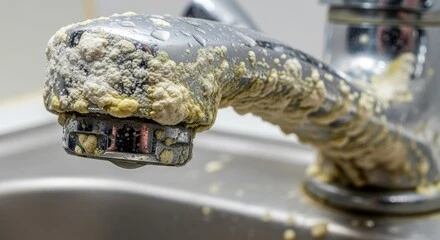
Hard water pipe wall thinning from NTMWD and Dallas Water Utilities mineral deposits creates a third failure pathway that operates independently of freeze events and pipe material defects. Copper supply lines in DFW homes — particularly those installed in the 1960s through 1980s — have had 40 to 60 years of hard water corrosion thinning the pipe wall from the inside. A copper pipe with significantly reduced wall thickness fails at stress thresholds — pressure fluctuations, temperature changes, minor physical contact — that an intact copper pipe would handle without consequence. Hard water thinned copper pipes fail more frequently and at lower provocation than their age alone would suggest.
What a Burst Pipe Repair Costs in DFW
Emergency Repair Cost — $400 to $1,500 Per Break
Location and access are the two variables that move the cost within this range. A garage supply line break with direct visual access and simple pipe material runs toward the lower end. An attic supply line break requiring ceiling access, a slab-adjacent break requiring concrete work, or a break inside a finished wall requiring drywall access runs toward the upper end. The repair cost covers locating the break, replacing the failed pipe section, and pressure testing the system before restoring water supply.
Water Damage Remediation — $2,000 to $15,000
Remediation cost reflects time and surface penetration. A failure discovered within the first hour affecting a contained hard surface area produces minimal remediation cost. A failure that ran overnight — the thaw-delay scenario common in DFW freeze events — produces saturated subfloor, wet wall cavities, damaged ceiling drywall, and potential mold conditions within 24 to 48 hours in North Texas humidity. Professional extraction, structural drying, mold assessment, and surface restoration in that scenario drives remediation cost toward the upper end of the range.
Temporary Water Restoration During Repair
A licensed plumber completing a burst pipe repair restores water supply to the home as part of the repair completion — the system is pressure tested and confirmed intact before water is turned back on. In a home with multiple failure points identified during the pressure test the plumber provides a written scope covering all breaks before full water service is restored. Partial service to unaffected areas of the home may be restored while repair work continues on isolated sections.
When Whole-Home Repiping Is More Cost-Effective
A home that produces two or more burst pipe failures during a single freeze event — common in pre-1995 DFW homes with polybutylene or galvanized steel supply lines — has reached the point where individual break repairs cost more in total than whole-home repiping with PEX-A. Each individual repair addresses one failure while leaving the same vulnerable pipe material in place throughout the rest of the system. Repiping addresses all existing failures and the material condition that caused them in a single planned scope of work.
Use our plumbing cost estimator to get a realistic repair or repipe cost range for your specific home size pipe material and DFW city.
Insurance Coverage for Freeze Damage
Most Texas homeowner insurance policies cover sudden and accidental burst pipe damage from a freeze event — including the water damage to walls, ceilings, and flooring. Coverage typically excludes the pipe repair itself, gradual leaks that predate the freeze, and damage resulting from failure to maintain adequate heat in the home. Document all damage with photographs before any cleanup or repair begins and contact your insurer before authorizing repair work to confirm coverage scope.
Use our plumbing cost estimator to get a realistic repair cost range for your specific home, pipe material, and DFW city before calling anyone.
How to Prevent the Next Burst Pipe in Your DFW Home
A burst pipe repair fixes the break. It does not fix what caused the break. The cause — freeze vulnerability, polybutylene degradation, or hard water pipe wall thinning — is still present in the same pipe system after the plumber leaves. Addressing the cause is what prevents the next failure.
Identify the root cause first. The pipe material and failure location tell a licensed plumber which cause produced the break. A freeze-related failure in an uninsulated garage run points to a freeze protection gap. A polybutylene failure in a pre-1995 home points to material degradation that is active throughout the entire supply system. A copper pipe failure in a 1970s home with no freeze exposure points to hard water wall thinning that has been progressing for decades. The root cause determines the prevention strategy.
Permanent freeze protection improvements address freeze vulnerability at the specific locations that produced the failure and at every other high-risk location identified during the post-repair assessment. Pipe insulation on garage and attic runs, frost-free hose bib replacement, and heat tape on chronic freeze-risk locations eliminate the exposure that caused the failure permanently rather than requiring Phase 1 preparation before every future freeze warning. Read our freeze protection guide for the complete permanent improvement options and cost ranges.
Polybutylene assessment and repiping for pre-1995 DFW homes is the only permanent solution when polybutylene is the root cause. A single polybutylene repair leaves the same degraded material in every other wall in the home. Whole-home repiping with PEX-A replaces all of it in a single planned scope of work — eliminating the silent failure risk that produced the first break and every potential break that would follow it. Read our polybutylene pipes guide for the full assessment and replacement framework.
Water softener installation stops hard water pipe wall thinning at the source for DFW homes where copper pipe corrosion is the identified cause. A whole-home water softener removes dissolved calcium and magnesium before they enter the pipe system — stopping the mineral deposit and corrosion process that has been thinning the pipe walls since the day the home was connected to the NTMWD or Dallas Water Utilities supply.
Annual plumbing inspection before winter identifies freeze-vulnerable pipe runs, assesses polybutylene condition in pre-1995 homes, and evaluates hard water damage on aging copper systems — before a failure makes all three of those assessments urgent. A pre-winter inspection costs a fraction of a single emergency call and produces a written scope of prevention improvements with costs before any work is committed to.
Following the six steps in this article — shutting off the water, turning off power, documenting before cleanup, beginning water removal, calling a licensed plumber, and contacting your insurer the same day — minimizes damage and protects the full value of a Texas homeowner insurance claim. A licensed plumber who answers emergency calls around the clock gives you an immediate response, a written repair price before touching the pipe, and a post-repair assessment that tells you whether the break was an isolated failure or a signal that the cause is still active in the same system.