
How Much Does a Plumber Cost in the DFW Metroplex — 2026 Pricing Guide for North Texas Homeowners
Most plumbing cost guides published online use national averages that understate what DFW homeowners actually pay — and do not account for the local factors that drive North Texas pricing above those averages. Hard water damage to existing connections, clay soil complexity on slab and sewer work, high licensed plumber demand across a fast-growing metro, and permit fee variation across dozens of DFW municipalities all affect what a job costs here versus what it costs nationally. This guide uses real 2026 Dallas County and Collin County market pricing so you know what to expect before you call anyone.
How DFW Plumbing Costs Are Structured — Hourly vs Flat Rate
Understanding how a plumber bills before the work starts is as important as knowing the cost range. The same job can look very different on the invoice depending on which billing structure the company uses.
Hourly billing charges for actual time on site plus materials. The meter runs from arrival to completion. A job quoted at $125 per hour that takes three hours costs $375 in labor before materials. If the job takes longer than expected — because of an unforeseen complication, a parts run, or difficult access — the cost increases with no ceiling unless a maximum was agreed in advance. Hourly billing benefits the plumber when jobs run long. It benefits the homeowner on jobs that complete faster than estimated.
Flat-rate billing provides a single price for the complete job before work begins. The price covers labor, materials, and any standard complications encountered during the repair. If the job takes longer than the company estimated the homeowner pays the quoted price — not the additional time. Flat-rate billing is the standard among established DFW plumbing companies because it removes pricing uncertainty for the homeowner and sets a clear expectation before anyone picks up a tool.
Which billing structure is more common in DFW is flat-rate by a significant margin among licensed residential plumbing companies. Hourly billing is more common in commercial work and in companies operating without a structured price book. A company that cannot give you a firm price before starting a standard residential job — drain cleaning, water heater replacement, fixture installation — is either billing hourly or does not have consistent pricing. Both warrant a follow-up question before you proceed.
How to compare quotes between hourly and flat-rate companies requires converting the hourly quote to a realistic total. Ask the hourly company for their estimated job duration and add 20 to 30 percent for realistic variance. Compare that total to the flat-rate quote from another company. In most cases the flat-rate total — including the certainty it provides — compares favorably to the hourly estimate once realistic duration is accounted for.
What a service call or trip fee covers is the cost of dispatching a licensed plumber to your home — truck, fuel, travel time, and the first assessment of the problem. In DFW service call fees run $50 to $150. Most established companies apply the service call fee toward the repair cost if you proceed with the work. Confirm this before booking — a company that charges a trip fee and does not apply it toward the repair is charging twice for the same visit.
What Affects Plumbing Costs in the DFW Metro
Two quotes for the same service from two licensed DFW plumbers can differ by several hundred dollars. The difference is almost never arbitrary. Six local factors drive cost variation across the DFW metro and understanding them explains why your specific job may cost more or less than the range estimates in this guide.
Home age and pipe material are the most consistent cost drivers across all service categories. A water heater replacement in a 2015 Frisco home with clean PEX-A supply connections and an accessible utility room is a straightforward installation. The same replacement in a 1968 Garland home with corroded galvanized steel connections, an original gas line fitting, and a cramped closet installation requires additional work at every connection point. Older homes cost more to work on because the existing conditions require more labor and more materials to address correctly.
Access difficulty moves cost significantly within any service category. A leak repair on an exposed supply line under a kitchen sink is a different job than the same repair on a slab-embedded pipe requiring concrete breaking and access excavation. A drain cleaning job with a cleanout accessible from the garage is a different job than the same drain requiring toilet removal to access the line. Every job has an access component that the plumber assesses on arrival — and access difficulty that was not visible from the initial description affects the final cost.
Parts and materials affect cost based on brand specification, availability, and what existing connections require. A Bradford White water heater costs more than a generic import. A Moen cartridge costs more than an off-brand equivalent. In DFW hard water conditions specifying higher-quality materials at connection points reduces callback frequency — a cost that established companies factor into their material recommendations even when a lower-cost option exists.
Emergency versus scheduled service adds 25 to 50 percent to standard rates for after-hours, weekend, and holiday calls across the DFW market. A drain cleaning that costs $200 during business hours on a Tuesday costs $300 to $400 at 11pm on a Saturday. Scheduling non-emergency work during regular business hours is the single most controllable cost reduction available to a DFW homeowner.
City permit requirements vary across DFW municipalities and affect total job cost. Plano, Frisco, McKinney, and Garland each maintain their own building department fee schedules for permits required on water heater replacements, gas line work, and sewer repairs. Permit fees in DFW cities typically run $50 to $200 per job depending on the scope. A licensed plumber files the required permit — that filing cost is a legitimate addition to the quoted price in cities that require it.
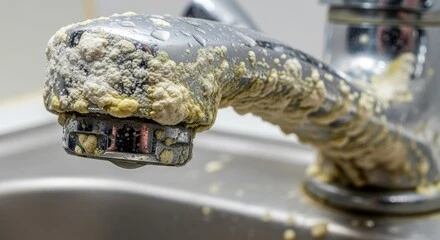
Hard water damage to existing connections is the DFW-specific cost driver that most national cost guides do not account for. NTMWD and Dallas Water Utilities hard water deposits mineral scale on supply line fittings, flexible connectors, and shutoff valves over time. When a plumber arrives to replace a water heater and finds corroded fittings and a scaled shutoff valve that will not operate cleanly, those connections must be replaced as part of the job. That additional work — common in DFW homes over 10 years old — adds $100 to $400 to jobs that would not require it in a low-hardness water market.
2026 Plumbing Cost Ranges by Service — DFW Market Pricing
What are the plumbing service costs in DFW in 2026?
Standard DFW plumbing service costs in 2026 range from $150 to $250 for drain cleaning to $3,500 to $12,000 for full sewer line replacement. Water heater replacement runs $950 to $2,800 installed depending on unit type. Slab leak detection and repair runs $1,500 to $5,500 depending on method. All prices reflect Dallas County and Collin County market conditions and do not include emergency after-hours premiums of 25 to 50 percent above standard rates.
These are real 2026 North Texas market prices based on Dallas County and Collin County residential service conditions. Ranges reflect variation in home age, access difficulty, pipe material, and permit requirements across the metro. Every job receives a written flat-rate price before work begins — use these ranges to evaluate whether the quote you receive is within normal market bounds.
Service | DFW 2026 Cost Range |
|---|---|
Service call and trip fee | $50 to $150 |
Drain cleaning — snake | $150 to $250 |
Drain cleaning — hydrojetting | $300 to $500 |
Water heater repair | $150 to $600 |
Water heater replacement — tank 40 to 50 gallon | $950 to $1,500 |
Water heater replacement — tank 75 to 80 gallon | $1,200 to $2,000 |
Water heater replacement — tankless gas | $1,500 to $2,800 |
Slab leak detection | $150 to $400 |
Slab leak repair — spot through slab | $1,500 to $3,500 |
Slab leak repair — reroute | $2,000 to $5,000 |
Sewer line camera inspection | $150 to $350 |
Sewer line repair — spot | $1,500 to $4,500 |
Sewer line replacement — full run | $3,500 to $12,000 |
Trenchless sewer lining — CIPP | $3,500 to $8,000 |
Gas line repair | $300 to $1,600 |
Leak repair — supply line | $150 to $500 |
Fixture installation | $150 to $450 |
Toilet repair | $150 to $400 |
Toilet replacement | $300 to $800 |
Whole-home repipe — PEX-A | $4,500 to $9,000 |
Water softener installation | $800 to $2,800 |
What the ranges reflect:
Lower end of each range applies to straightforward jobs in newer homes with accessible connections, clean pipe materials, no hard water damage to existing fittings, and no permit requirement. Standard business hours scheduling.
Upper end of each range applies to older DFW homes with corroded connections, difficult access, cast iron or galvanized steel materials requiring additional work, permit filing, and hard water damage to existing fittings that requires replacement at time of service.
Outside the range — above the upper end — typically indicates access that requires concrete breaking or structural modification, emergency after-hours response, or complications discovered after work began that were not visible during the initial assessment. A licensed plumber provides a revised written estimate before proceeding with any work that falls outside the original scope.
DFW Plumbing Cost by City — Why Prices Vary Across the Metro
The same plumbing service performed by the same licensed company costs differently in Plano than it does in Garland — and the difference is not arbitrary pricing. Four local variables produce genuine cost variation across DFW cities that homeowners should understand before comparing quotes from companies serving different parts of the metro.
Permit costs and inspection fees vary by city because every DFW municipality sets its own building department fee schedule independently. A water heater replacement permit in Frisco runs at a different rate than the same permit in Mesquite. A sewer line repair permit in Plano has a different fee structure than one in Garland. These are real cost differences that a licensed plumber passes through at actual cost — not markup. A company that skips the permit avoids this cost but exposes the homeowner to failed inspections, insurance complications, and problems at closing.
Labor rates differ between established neighborhoods and new construction corridors for two practical reasons. Supply house proximity and job density. A plumber working in an established Garland neighborhood can complete multiple jobs in a single area on the same day — reducing per-job travel time and overhead. A plumber driving to a new master-planned community in far north Frisco or McKinney along the SH-121 corridor faces longer drive times from supply houses and between jobs — overhead that affects pricing in high-growth outlying areas.
Plano and Frisco versus Mesquite and Garland illustrates the home age cost dynamic most clearly. A standard water heater replacement in a 2005 Plano home with clean PVC connections, an accessible garage location, and a straightforward gas line fitting runs toward the lower end of the market range. The same replacement in a 1972 Garland home with corroded galvanized steel supply connections, an original gas fitting that requires a new flex connector, and a tight utility closet installation runs toward the upper end — not because the job is more valuable in Garland but because the existing conditions require more work. Our plumber in Garland TX page covers the specific plumbing conditions that older Garland homes present in more detail.
How home age affects per-job cost across Dallas County versus Collin County is the most consistent cost pattern in the DFW market. Dallas County cities — Garland, Mesquite, Richardson, Rowlett — have median home ages that put a significant share of their housing stock in the pre-1985 category where hard water damage, aging pipe materials, and corroded connections add labor and materials to every job. Collin County cities — Plano, Frisco, McKinney, Wylie — have younger median housing stock with cleaner connections but higher permit fees and supply logistics costs in newer growth areas.
The same job costs differently depending on what the plumber finds when they arrive. A written flat-rate estimate issued after the plumber has assessed the actual conditions at your home — not before — is the only cost figure that accurately reflects what your specific job will cost.
Is plumbing more expensive in Plano or Frisco than in Garland or Mesquite in DFW?
Not consistently. Plano and Frisco have higher permit fees and supply logistics costs in newer growth corridors but younger housing stock with cleaner connections that reduce per-job labor. Garland and Mesquite have lower permit fees but older pre-1985 housing stock where corroded connections, aging pipe materials, and hard water damage to existing fittings add labor and materials to most jobs. The total cost of the same service is similar across the metro — what drives it higher or lower is the specific home condition not the city.
Emergency Plumbing Costs in DFW — What After-Hours Service Adds
Emergency plumbing costs more in DFW than standard scheduled service — and the premium is real regardless of what a company’s advertising says about after-hours pricing. Understanding what triggers emergency pricing and what does not helps DFW homeowners avoid paying emergency rates on problems that could wait until morning.
The standard after-hours premium across the DFW market runs 25 to 50 percent above standard rates for calls dispatched after normal business hours, on weekends, and on holidays. A drain cleaning that costs $200 during a Tuesday afternoon costs $250 to $300 at 9pm on a Friday. A water heater replacement quoted at $1,200 during business hours runs $1,500 to $1,800 on a Sunday morning. The premium reflects real overtime labor costs, reduced parts availability outside business hours, and the on-call overhead that 24-hour availability requires.
What qualifies as an emergency call versus a next-day scheduled call is determined by active damage risk — not homeowner preference or inconvenience. A burst pipe actively flooding a room is an emergency. Raw sewage backing up into living spaces is an emergency. A gas line leak is an emergency. A slow drain, a dripping faucet, a water heater that is not producing adequate hot water, or a toilet that runs intermittently are not emergencies — they are inconveniences that can be scheduled the following business day without risk of additional property damage.
How to avoid emergency pricing on non-emergency problems requires an honest assessment of whether waiting until morning creates additional damage risk. If the water is off at the main shutoff and no active damage is occurring the problem can almost always wait until standard business hours. If the problem is a slow drain, reduced water pressure, or inconsistent hot water — conditions that have likely been developing for days or weeks — scheduling the following morning saves 25 to 50 percent of the labor cost with no additional damage consequence.
What companies that advertise no after-hours premium actually charge requires reading the full pricing structure before calling. Some DFW plumbing companies advertise 24-hour service with no emergency surcharge — but price their standard rates high enough that the effective cost of after-hours work is comparable to a standard-rate company with an explicit emergency premium. The relevant comparison is total job cost not whether the company uses the word surcharge. Get a written flat-rate price before any work begins regardless of what the advertising says about emergency pricing.
How to Know If a DFW Plumbing Quote Is Reasonable
A reasonable DFW plumbing quote is not simply the lowest number you receive. It is a written flat-rate price that covers a clearly defined scope of work from a licensed plumber whose credentials you can verify before work begins. These are the standards that separate a reasonable quote from one that warrants a second opinion.
How to compare quotes across service types requires comparing the same scope not just the same service name. Two drain cleaning quotes — one for snaking and one for hydrojetting — are not comparable even though both describe drain cleaning. Two water heater replacement quotes — one including permit filing and one excluding it — are not comparable at face value. Before comparing prices confirm that each quote covers the same method, the same materials, the same permit requirements, and the same warranty terms. A quote that is significantly lower than the market range almost always excludes something the higher quote includes.
Red flags in a DFW plumbing quote indicate either an unlicensed operator, a company with inconsistent pricing standards, or a scope that is incomplete and will expand after work begins. Red flags include a verbal price rather than a written estimate, a quote issued without the plumber having assessed the actual conditions at your home, no mention of permit requirements on jobs that require one, a price significantly below the market range with no explanation of what is excluded, and pressure to approve work immediately before you have time to review the written scope.
What a legitimate written flat-rate estimate includes covers six specific items. The company name and TSBPE license number. A description of the specific work to be performed. The materials to be used including brands where relevant. Whether permit filing is included or excluded and the permit cost if applicable. The warranty on labor and on parts separately. The total price that will appear on the final invoice.
How to verify a plumber’s license before accepting a quote requires one step — go to tsbpe.texas.gov and search the company license number or plumber name. A current active license confirms the company is authorized to perform plumbing work in Texas. An expired license, a suspended license, or no result for the company name are each disqualifying. Buckner Blvd Plumbing Co Inc license number PNT.040415 is searchable and active right now.
The 50 percent repair rule provides a reliable decision framework when a plumber recommends repair on an aging component. If the repair cost exceeds 50 percent of the replacement cost for the same component — and the component is more than halfway through its expected service life — replacement is almost always the better financial decision. A $700 repair on a 13-year-old water heater in DFW hard water conditions that costs $1,200 to replace installed fails the 50 percent rule on both cost and age.
Quick Summary — DFW Plumbing Quote Red Flags
- Verbal price only — no written estimate before work begins
- Quote issued without assessing actual conditions at your home
- No mention of permit requirements on jobs that require one
- Price significantly below market range with no scope explanation
- Pressure to approve work immediately without review time
- No license number provided or license not verifiable at tsbpe.texas.gov
- Warranty not mentioned or not provided in writing
What Drives DFW Plumbing Costs Higher Than National Averages
National average plumbing cost figures are calculated across markets with widely varying labor costs, material prices, and local conditions. DFW sits above those averages for five specific reasons — none of which are arbitrary and all of which reflect real costs that licensed plumbers operating in this market absorb and pass through at actual cost.
Hard water damage requiring additional connection work is the most pervasive DFW-specific cost driver. NTMWD and Dallas Water Utilities deliver hard to very hard water to every home in the metro. That water deposits mineral scale on supply line fittings, flexible connectors, shutoff valves, and water heater connections continuously. When a plumber arrives to perform a standard service — water heater replacement, leak repair, fixture installation — and finds corroded or scaled connections that will not operate correctly or safely, those connections must be replaced as part of the job. This additional work adds $100 to $400 to jobs that would not require it in a low-hardness water market. It occurs on a significant share of DFW service calls in homes over 10 years old and does not appear in national average cost calculations.
Clay soil conditions adding complexity to slab and sewer work make every underground plumbing job in DFW more complex than the same job in stable soil regions. Expansive Blackland Prairie clay soil moves seasonally — shifting slab-embedded pipes, displacing sewer lines off grade, and making excavation restoration more difficult and more expensive than in sandy or loam soil markets. A slab leak repair or sewer line replacement in DFW requires accounting for clay soil behavior during and after the repair in ways that add time, materials, and follow-up work that flat national average figures do not include.
DFW construction growth creating high licensed plumber demand has maintained upward pressure on labor rates across the metro throughout the 2020s. The DFW metro consistently ranks among the fastest-growing in the United States. New construction, commercial development, and residential renovation all compete for the same pool of licensed plumbers. High demand for licensed tradespeople in a growing market pushes labor rates above national averages — a market dynamic that affects every service category from drain cleaning to whole-home repiping.
Permit and inspection fees across multiple municipalities add a cost layer that single-jurisdiction markets do not face at the same scale. The DFW metro spans dozens of incorporated cities — Mesquite, Garland, Plano, Frisco, McKinney, Richardson, Rockwall, Wylie, Rowlett, and Forney among them — each with an independent building department and fee schedule. A plumbing company operating across the metro navigates multiple permit systems, inspection schedules, and fee structures simultaneously. That administrative complexity and the permit fees themselves are real costs that appear in DFW plumbing invoices and not in national average figures calculated across simpler regulatory environments.
Material cost increases from 2024 to 2026 have affected DFW plumbing pricing across all service categories. Copper pipe, PEX-A, brass fittings, water heater units, and PVC materials have all seen price increases over the 2024 to 2026 period from supply chain factors and domestic manufacturing cost increases. DFW’s high-volume market absorbs these increases at scale — the cost per job reflects current 2026 material pricing not the lower figures that pre-2024 national average guides reference.
How to Reduce Your Plumbing Costs in North Texas
DFW plumbing costs are driven by real local factors that cannot be eliminated. What can be controlled is how a homeowner approaches the timing, preparation, and prevention decisions that determine where on the cost range their specific jobs land.
Schedule non-emergency work during regular business hours. The 25 to 50 percent after-hours premium is the most immediately controllable plumbing cost in DFW. A slow drain, an inconsistent water heater, a dripping faucet, or a toilet that runs intermittently can all be scheduled the following business day without additional damage risk. Reserving emergency calls for actual emergencies — active flooding, sewage backup, gas leaks — keeps the majority of plumbing spend at standard rates.
Get written flat-rate estimates from at least two licensed companies before committing to any job over $500. The DFW market has meaningful price variation across licensed companies for the same service. Two written flat-rate estimates for the same scope — same method, same materials, same permit requirements — give you a real market comparison for your specific job rather than a comparison against a national average that may not reflect your home’s actual conditions.
Use the diagnostic tool to identify the problem before calling. A homeowner who calls a plumber and can describe the specific symptom, the affected fixture location, the pipe material if visible, and when the problem started gives the plumber enough information to arrive with the right materials and equipment. A plumber who arrives prepared completes the job faster — and in hourly billing scenarios faster completion directly reduces cost. Our free plumbing diagnostic tool structures that information before you call so nothing important is missed.
Address small problems before they become expensive ones. A dripping faucet that costs $150 to repair becomes a corroded valve that costs $400 to replace if left for another year in DFW hard water conditions. A slow drain that costs $200 to hydrojet becomes a camera inspection plus sewer repair when grade loss produces a complete backup. The cost difference between early intervention and delayed response is consistently significant in a hard water clay soil market where small problems compound faster than in lower-stress environments.
Install a water softener to reduce hard water damage repair frequency. The $100 to $400 additional connection work that hard water damage adds to DFW service calls occurs on a significant share of jobs in homes over 10 years old. A whole-home water softener stops that damage at the source. Over five to ten years the avoided connection replacement costs — across water heater replacements, fixture installations, and leak repairs — contribute meaningfully to the softener’s return on investment alongside the energy and appliance lifespan benefits.
Annual plumbing inspection before winter converts the highest-cost plumbing events — emergency freeze failures, undetected slab leaks, sewage backups from deteriorating sewer lines — from reactive emergencies into planned maintenance. A pre-winter inspection in DFW costs $150 to $350 and identifies the conditions most likely to produce an emergency call in the following six months. The cost of the inspection is recovered if it prevents a single emergency call at after-hours rates.
Contct our team to get a realistic cost range for your specific service, home age, and DFW city before calling anyone.
Knowing real DFW market pricing before you call removes the uncertainty that causes homeowners to delay necessary repairs — and delayed repairs in a hard water clay soil market consistently cost more than early intervention. A written flat-rate estimate from a licensed plumber gives you the exact cost for your specific home and job before any work begins, a verifiable license number before anyone enters your property, and a number that does not change when the work is done.